Cleome glaucescens DC.
مقيبل الشمس
For people
- Eaten by people
- Unknown
- Toxic to people
- Unknown
For livestock
- Grazed by livestock
- Not grazed
- Toxic to livestock
- Unknown
Edibility and safety notes
No reliable information was found on whether people can eat this plant or whether it is poisonous, so it should not be eaten. The Omani field guide records it as not grazed by livestock; no source was found on toxicity to animals.
This guide is a hobby project, not expert advice. Never eat a wild plant, or feed it to animals, on the strength of this page alone. Read the disclaimer
Description
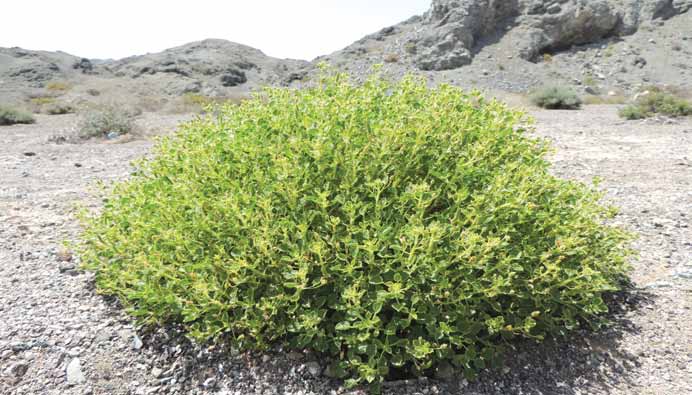
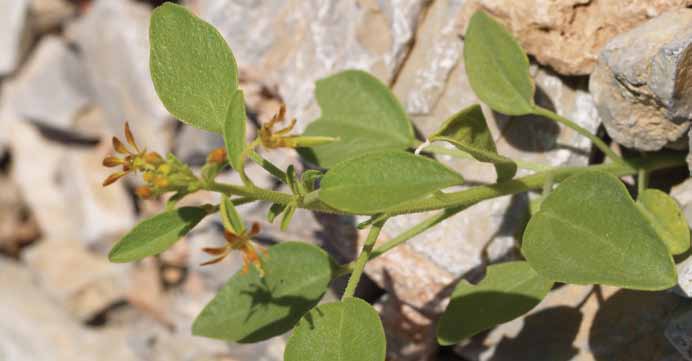
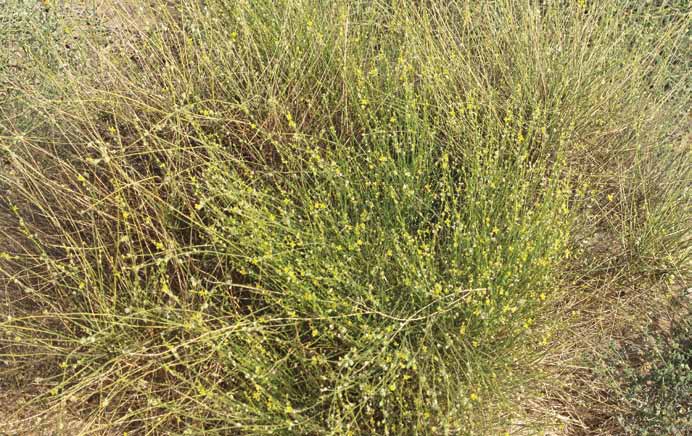
According to the Omani field guide, an erect herb 20-50 cm tall with palmately compound leaves of 3-5 leaflets, yellow flowers in racemes and long cylindrical capsules. Plants of the World Online describes the species as a subshrub. These details could not be checked against a full botanical description.
Habitat
Desert wadis.
Distribution
From western Syria and Iraq to western Iran, and from Afghanistan to western Pakistan; also in the south-eastern Arabian Peninsula, where it occurs in parts of northern Oman.
Pastoral value
Not grazed, according to the Omani field guide.
Other uses
No documented uses were found.
Sources
- الدليل الحقلي المصور للنباتات البرية في سلطنة عُمان (BOOK.pdf p.64)
- Plants of the World Online — Cleome glaucescens DC. (seen in search results; page itself blocked) — powo.science.kew.org
- Chamberlain, Clement & Lamond (1994), Studies in the Flora of Arabia XXVIII (Arabian Cleome, family context) — journals.rbge.org.uk