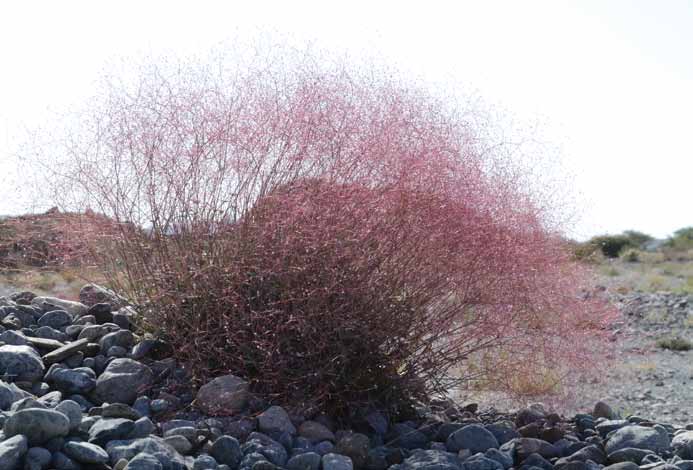
Commicarpus helenae (Roem. & Schult.) Meikle
عيطف، رفرف، غومل
For people
- Eaten by people
- Unknown
- Toxic to people
- Unknown
For livestock
- Grazed by livestock
- Good fodder
- Toxic to livestock
- Unknown
Edibility and safety notes
No reliable information was found on whether people can eat this plant or whether it is poisonous, so it should not be eaten. The Omani field guide rates it as good grazing for livestock; no other source on forage value or on toxicity to animals was found. The fruits are sticky and glandular and cling to skin and clothing.
This guide is a hobby project, not expert advice. Never eat a wild plant, or feed it to animals, on the strength of this page alone. Read the disclaimer
Description
A branched straggling or scrambling perennial in the Nyctaginaceae family. Stems are glabrous and whitish-green. Leaves are ovate to suborbicular, 1.2-4 cm long, with repand to sinuate margins. Flowers are small, 6-6.5 mm long, pink or pinkish-red, 3-5 per node.
Habitat
Shaded places in deserts; wadis, plantations and mountain foothills, on stony, sandy or gravelly soil.
Distribution
Native to Africa, western Asia, the Arabian Peninsula, and Pakistan to India. Grows primarily in desert or dry shrubland biomes.
Pastoral value
Good grazing plant, according to the Omani field guide.
Other uses
No documented uses were found.
Sources
- الدليل الحقلي المصور للنباتات البرية في سلطنة عُمان (BOOK.pdf p.145)
- UAE National Red List — Commicarpus helenae — nationalredlist.org
- Teline.fr — Commicarpus helenae var. helenae (diagnostic characters) — teline.fr
- Meikle, Notes RBG Edinburgh — key to Commicarpus — journals.rbge.org.uk