Convolvulus arvensis L.
عليق، ملوية، مديدة، رشا، سيم، أذن الفأر
For people
- Eaten by people
- Not edible
- Toxic to people
- Toxic
For livestock
- Grazed by livestock
- Limited fodder
- Toxic to livestock
- Toxic
Edibility and safety notes
Not a food plant: the whole plant contains tropane alkaloids (mainly pseudotropine), and the root and its resin are strongly purgative; leaf and flower teas are laxative. Do not eat it or use it as a home remedy. Sheep, goats and cattle graze the foliage and the Omani field guide rates it good grazing, but horses kept on heavily infested pasture developed weight loss, colic and intestinal damage, and mice fed the plant became ill. Treat it as a risk for horses and donkeys and as unsuitable as the main feed for any animal.
This guide is a hobby project, not expert advice. Never eat a wild plant, or feed it to animals, on the strength of this page alone. Read the disclaimer
Description
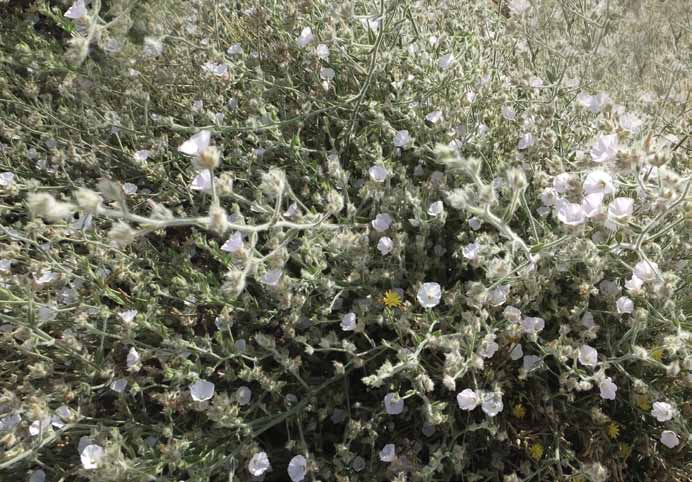
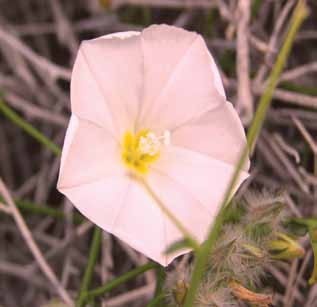
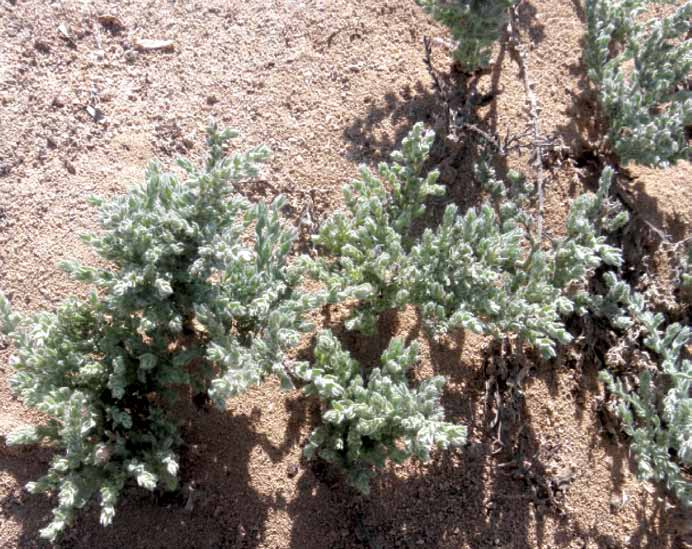
A long-lived perennial herb with twining or prostrate stems and mostly hairless ovate-oblong to lanceolate leaves up to 7.5 cm long with a notched base. Flowers are usually solitary, white or pink, about 2 cm long. Fruits are light brown and rounded containing 2 seeds.
Habitat
Found in lawns, gardens, fields, clay banks, roadsides, railroads, vacant lots and waste areas. Grows in full sun to full shade, drought-tolerant. Primarily in disturbed areas.
Distribution
Native to continental Europe and Asia. Widely naturalized in tropical and temperate parts of the world.
Pastoral value
Rated good grazing by the Omani field guide, and the foliage is eaten by sheep, goats and cattle. It is also a persistent weed of cultivated land, and it contains tropane alkaloids that have been linked to colic and intestinal damage in horses on heavily infested pasture.
Other uses
Traditionally the root and its resin were used as a strong purgative, and teas of the leaves or flowers as a laxative and for fevers and wounds. The stems have been used as a weak tying twine and the whole plant yields a green dye. These are traditional uses, not medical advice. It is a deep-rooted, persistent agricultural weed whose seeds stay viable in the soil for many years.
Sources
- الدليل الحقلي المصور للنباتات البرية في سلطنة عُمان (BOOK.pdf p.85)
- Todd et al. 1995, Tropane alkaloids and toxicity of Convolvulus arvensis (PubMed) — pubmed.ncbi.nlm.nih.gov
- Plants For A Future — Convolvulus arvensis — pfaf.org
- Useful Temperate Plants — Convolvulus arvensis — temperate.theferns.info
- Washington State University Extension — Field Bindweed — smallgrains.wsu.edu
- Weed Technology 34(6) — Field bindweed (Convolvulus arvensis): 'all tied up' (review) — bioone.org
- Wikipedia - Convolvulus arvensis — en.wikipedia.org