Dactyloctenium aegyptium (L.) Willd.
سعدوت، جنم، بنعم الرشيدي
For people
- Eaten by people
- Not edible
- Toxic to people
- Unknown
For livestock
- Grazed by livestock
- Good fodder
- Toxic to livestock
- Toxic
Edibility and safety notes
Not recommended as food: the seeds have been eaten only as a famine food in parts of Africa and India (roasted, ground into flour and cooked as porridge), and sources warn that the grain tastes unpleasant and may cause internal disorders. All kinds of livestock, including camels, graze it readily and it makes good hay. However, the green plant can contain cyanogenic glucosides at certain growth stages and may then be dangerous to grazing animals, so do not let hungry stock feed on it alone.
This guide is a hobby project, not expert advice. Never eat a wild plant, or feed it to animals, on the strength of this page alone. Read the disclaimer
Description
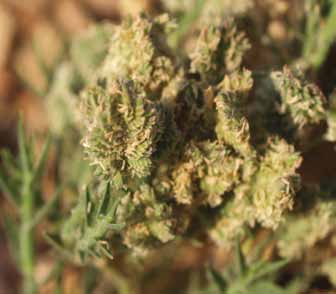
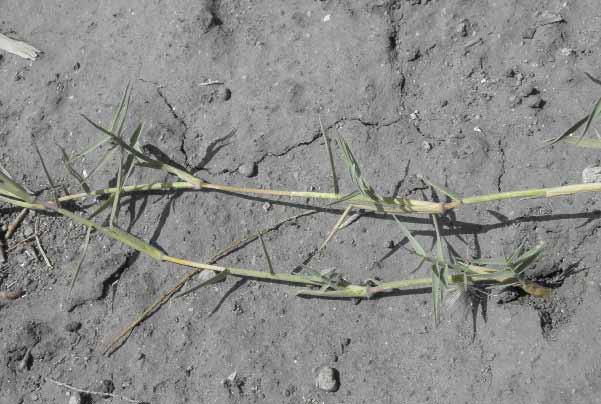
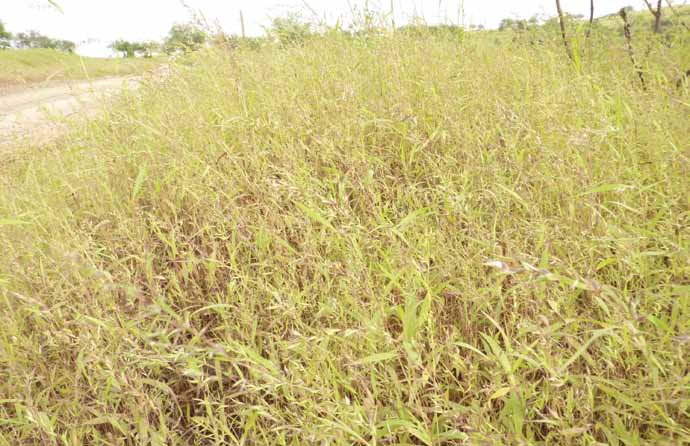
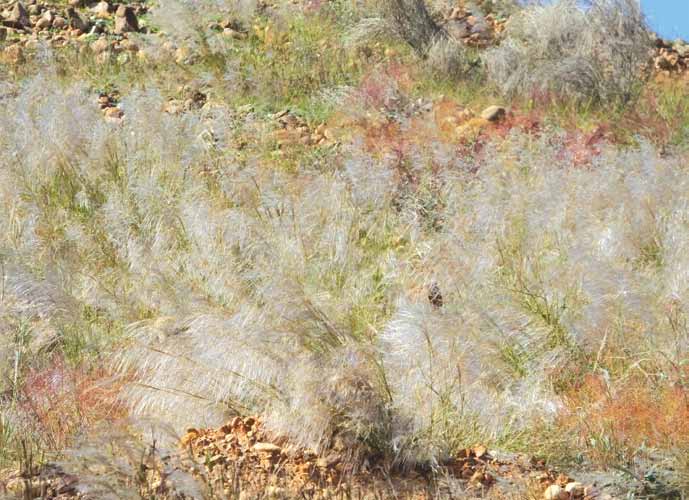
An annual (sometimes short-lived perennial) tufted grass 40-60 cm tall, occasionally to 75 cm. The lower parts of the stems lie on the ground and root at the nodes. Leaves are flat and sparsely hairy, with a ligule reduced to a row of hairs. The seed head consists of 3-5 short, flat spikes 2-3 cm long spreading horizontally like fingers from the tip of the stem, resembling a crow's foot; each spike axis ends in a bare point. Spikelets are 3-5-flowered, flattened sideways and packed in two rows on one side of the axis. Flowers June to October.
Habitat
Grows mostly in heavy soils at damp sites. Found between sea level and 2100 m altitude, in areas with 400-1500 mm annual rainfall. Commonly invades arable lands, disturbed sites, and roadsides.
Distribution
Native to Africa. Widely distributed throughout the tropics, subtropics, and warm temperate regions of the Old World. Introduced to the Americas.
Pastoral value
Suitable for grazing, does well in overgrazed pastures. Yields excellent hay at 3-6 tonnes DM/ha. Important forage grass.
Other uses
The seeds are a famine food in parts of Africa and India, roasted, ground and cooked as porridge, and are also used to make alcoholic drinks and fed to poultry; the grain is reported to taste unpleasant and may cause digestive upset. In Oman the cooked seeds are traditionally used for abdominal pain after childbirth and the crushed plant is applied to sores. Elsewhere decoctions are used in folk medicine for lumbago and dysentery.
Sources
- الدليل الحقلي المصور للنباتات البرية في سلطنة عُمان (BOOK.pdf p.158)
- Feedipedia - Egyptian crowfoot grass (Dactyloctenium aegyptium) — feedipedia.org
- Useful Tropical Plants - Dactyloctenium aegyptium — tropical.theferns.info
- Wikipedia - Dactyloctenium aegyptium — en.wikipedia.org
- Flora of Qatar - Dactyloctenium aegyptium — floraofqatar.com
- GBIF occurrence records - Dactyloctenium aegyptium in Oman (71 records) — api.gbif.org