Aeluropus lagopoides (L.) Trin.
شويال، أكريش، عجرش
For people
- Eaten by people
- Unknown
- Toxic to people
- Unknown
For livestock
- Grazed by livestock
- Good fodder
- Toxic to livestock
- Not toxic
Edibility and safety notes
This is a fodder grass, not a human food: no reliable source documents people eating any part of it. Livestock graze it readily and it is rated good fodder; animals favour it because its leaves accumulate less salt than neighbouring salt-marsh plants. It grows on saline flats, and the leaves are stiff and sharp-pointed.
This guide is a hobby project, not expert advice. Never eat a wild plant, or feed it to animals, on the strength of this page alone. Read the disclaimer
Description
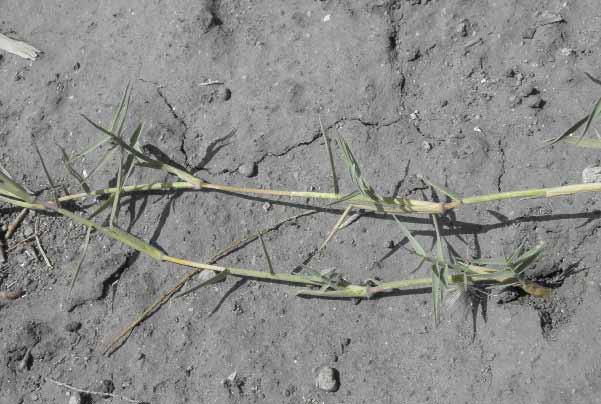
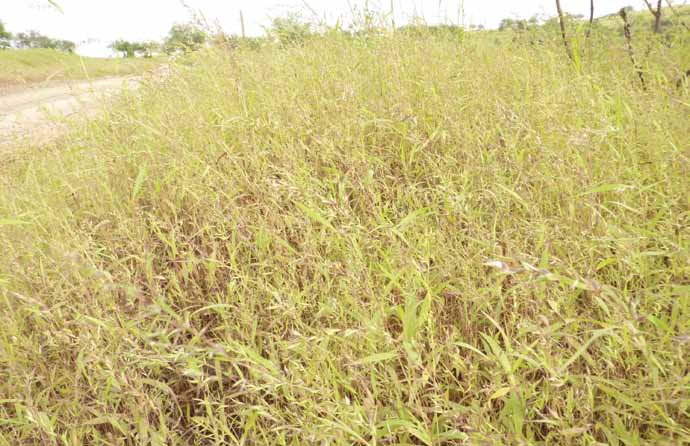
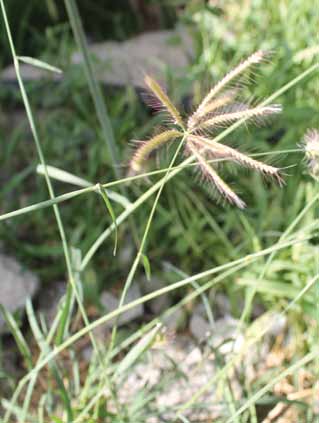
A mat-forming, straggling perennial grass with long stolons, growing to a maximum of 30 cm. Stems may become woody. Greyish-green lanceolate leaves are stiff and leathery, 5-40 mm long with loose leaf-sheaths.
Habitat
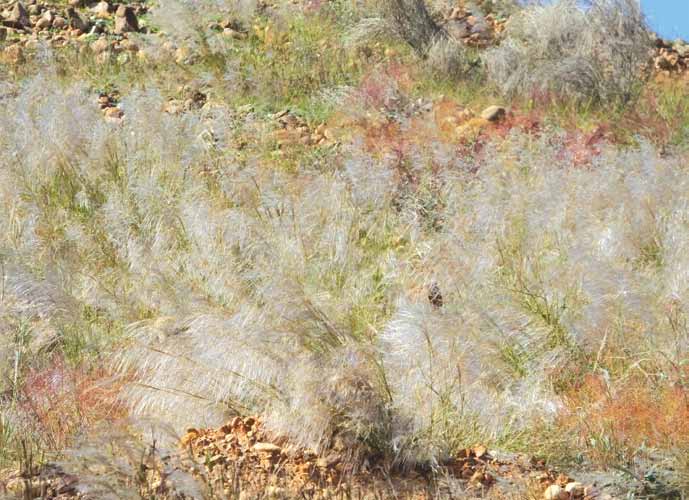
Halophytic plant found on fringes of salt marshes, salt flats, near sulphurous springs, and in damp to waterlogged saline conditions. Has salt-secreting glands and thick waxy cuticle.
Distribution
Northern Africa, eastern Mediterranean, Middle East, Arabian Peninsula, and eastwards to Pakistan and India. Also found in southeastern Europe, Sicily, Cyprus, Somalia, Ethiopia and Central Asia.
Pastoral value
Good fodder. It dies back in the dry season and sprouts well after winter rains; grazing animals favour it because its foliage accumulates less salt than that of neighbouring halophytes.
Other uses
Used for sand stabilization and soil reclamation in saline areas. Also used as ground cover.
Sources
- الدليل الحقلي المصور للنباتات البرية في سلطنة عُمان (BOOK.pdf p.151)
- Qatar e-Nature - Ikrish (Aeluropus lagopoides) — enature.qa
- Wikipedia - Aeluropus lagopoides — en.wikipedia.org
- Indian Farming - Halophytic fodder for an extreme saline-sodic ecosystem of arid and semi-arid regions — epubs.icar.org.in