Chloris barbata Sw.
خزمزام
For people
- Eaten by people
- Unknown
- Toxic to people
- Unknown
For livestock
- Grazed by livestock
- Limited fodder
- Toxic to livestock
- Unknown
Edibility and safety notes
No reliable information on human food use or toxicity of this grass was found; it is not known as a food plant. The Omani field guide rates it as good grazing, but no independent source confirming its forage value could be read. Feedipedia notes that in Brazil invasive Chloris barbata and Chloris virgata in pastures were presumed to be the cause of outbreaks of a tremor (staggers) syndrome in livestock linked to fungal toxins on the grass, with low mortality.
This guide is a hobby project, not expert advice. Never eat a wild plant, or feed it to animals, on the strength of this page alone. Read the disclaimer
Description
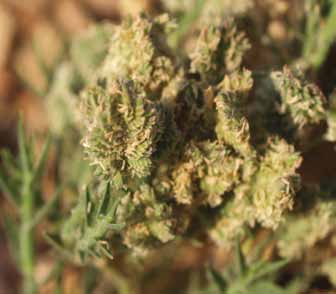
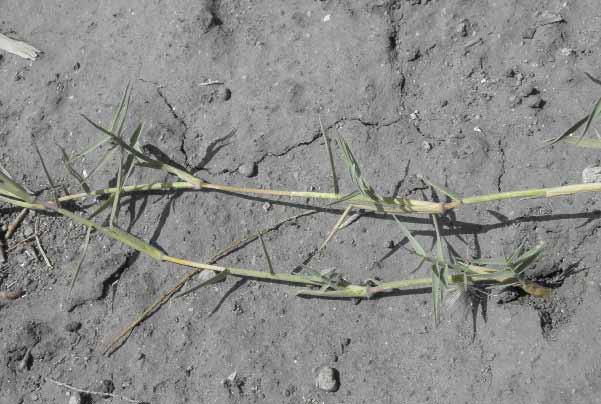
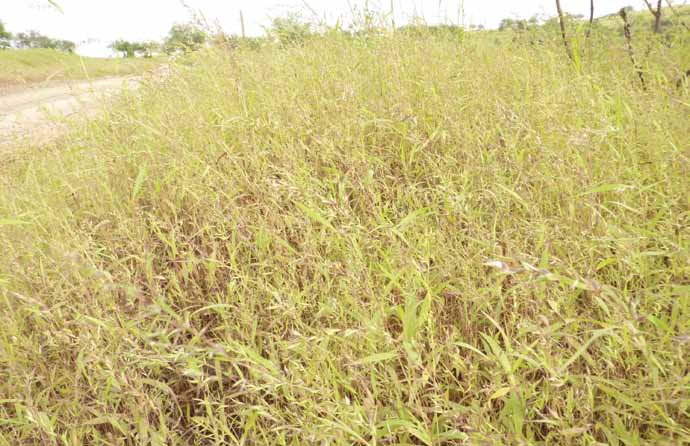
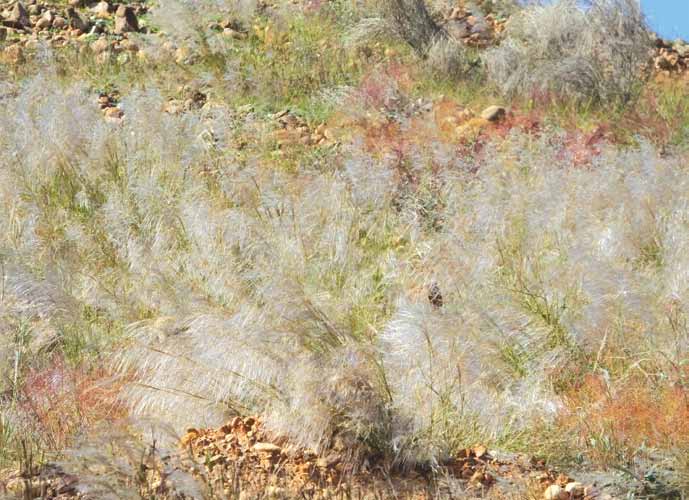
An annual grass with culms 15-95 cm tall, erect or decumbent, rooting at lower nodes. Has glabrous sheaths with small ligules and blades up to 15 cm long. Panicles are digitate with 7-15 distinct branches, 3-8 cm long. Nodes often purplish.
Habitat
Grows in subtropical and tropical coastal regions on loams, limestone-derived soils, and along beaches. Found in abandoned fields, roadsides, and degraded land in drier areas.
Distribution
Native to drier parts of the Old World tropics and sub-tropics. Introduced to southern US, Latin America, Caribbean, tropical islands, and Australia.
Pastoral value
Rated as good grazing by the Omani field guide. Elsewhere it is regarded mainly as a weed of disturbed ground and degraded pasture.
Other uses
Considered an invasive weed with limited beneficial uses.
Sources
- الدليل الحقلي المصور للنباتات البرية في سلطنة عُمان (BOOK.pdf p.155)
- Wikipedia - Chloris barbata — en.wikipedia.org
- Flowers of India - Swollen Finger Grass (Chloris barbata) — flowersofindia.net
- Feedipedia - Blackseed grass (Chloris virgata), tremorgenic syndrome note mentioning Chloris barbata — feedipedia.org