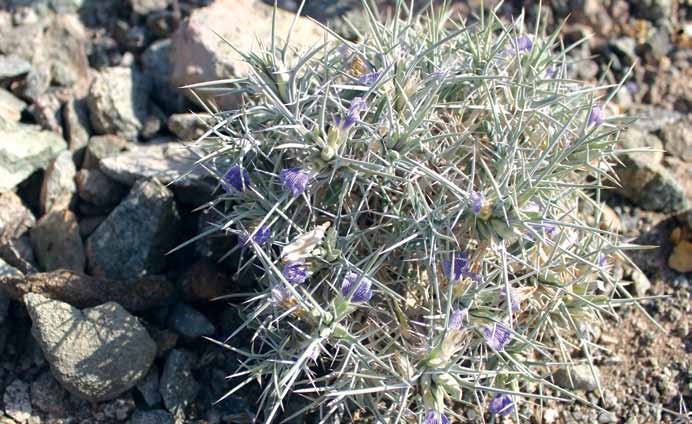
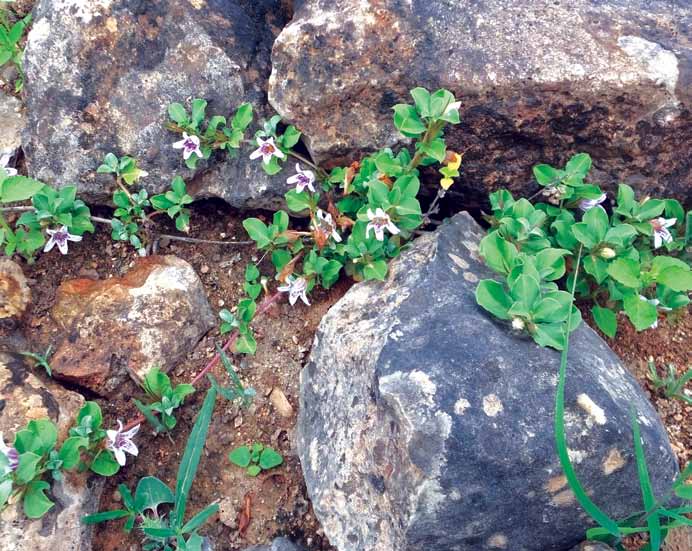
Avicennia marina (Forssk.) Vierh.
القرم
For people
- Eaten by people
- Not edible
- Toxic to people
- Unknown
For livestock
- Grazed by livestock
- Good fodder
- Toxic to livestock
- Not toxic
Edibility and safety notes
Not a food plant in Oman. The seeds (propagules) are bitter and considered toxic raw; Aboriginal Australians ate them only as a famine food after burying, roasting or boiling in several changes of water, so they should not be eaten without such lengthy processing. The leaves are heavily browsed by camels and also by goats throughout the Middle East and northeast Africa and are cut as fodder; overgrazing damages the mangroves.
This guide is a hobby project, not expert advice. Never eat a wild plant, or feed it to animals, on the strength of this page alone. Read the disclaimer
Description
A mangrove shrub or tree growing 3-14 m tall with smooth light-grey bark of thin brittle flakes. Leaves are thick, 5-8 cm long, glossy green above and silvery-white below. Flowers are white to golden yellow, less than 1 cm across, in clusters of 3-5. Has distinctive aerial roots (pneumatophores) about 20 cm high for oxygen absorption.
Habitat
Occurs in intertidal zones of estuarine areas. Pioneer in muddy soil conditions with pH 6.5-8.0. Found in sabkha environments along coastal areas.
Distribution
Distributed along Africa's east coast, south-west, south and south-east Asia, Australia, and northern New Zealand. One of the few mangroves found in arid coastal regions of the Arabian Peninsula.
Pastoral value
Good browse for goats and camels. Mangrove leaves are extensively used as camel fodder throughout the Middle East and northeast Africa, cut and carried to animals or browsed directly, especially in drought; uncontrolled camel grazing is a recognised threat to Oman's mangroves.
Other uses
Stabilizes river banks and channels. Source of pollen for beekeeping. Provides habitat for waterbirds and juvenile fish. Used as insect repellent, dye plant, source of tannins, and timber. Used in traditional medicine.
Sources
- الدليل الحقلي المصور للنباتات البرية في سلطنة عُمان (BOOK.pdf p.48)
- POWO — Avicennia marina (Forssk.) Vierh. — powo.science.kew.org
- PROSEA (Pl@ntUse) — Avicennia — plantuse.plantnet.org(PROSEA)
- FAO — Status and management of mangrove ecosystems in Egypt (camel fodder use) — fao.org
- Rare Fruit Council of Australia — Bushfoods, an annotated list (Avicennia marina seeds) — rfcarchives.org.au
- NParks Flora & Fauna Web — Avicennia marina — nparks.gov.sg
- Environment Authority Oman — Qurm Nature Reserve — ea.gov.om