Bidens pilosa L.
لسليس
For people
- Eaten by people
- Edible
- Toxic to people
- Unknown
For livestock
- Grazed by livestock
- Limited fodder
- Toxic to livestock
- Unknown
Edibility and safety notes
Young leaves and shoot tips are eaten as a cooked leaf vegetable in East Africa, Asia and Latin America, usually boiled or parboiled; mature leaves are bitter and avoided. Eat only cooked and in moderation: raw plants are high in saponins, the sap contains light-activated (phototoxic) compounds that can irritate skin in sunlight, and long-term heavy consumption has been linked to oesophageal cancer in South Africa. Livestock browse it only sparingly (pigs and horses have been fed it); it taints cows' milk, and the barbed seeds cling to wool and fur. The book rates it non-pastoral.
This guide is a hobby project, not expert advice. Never eat a wild plant, or feed it to animals, on the strength of this page alone. Read the disclaimer
Description
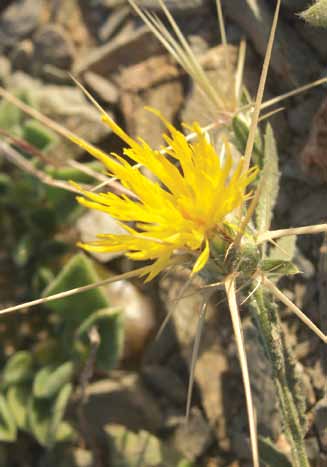
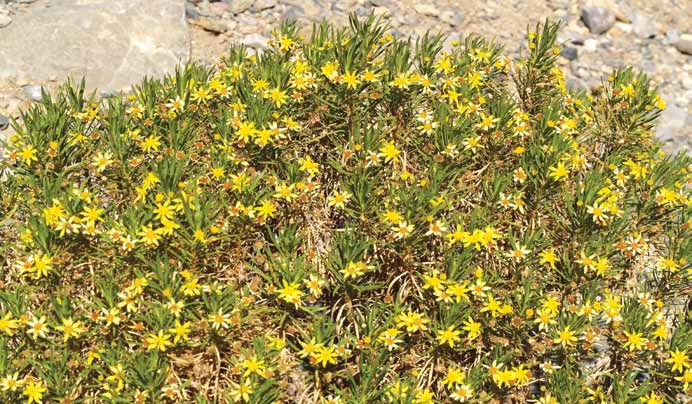
An annual herb with erect habit up to 1.5 m tall. Stems are square in cross section, mostly hairless, green to purplish. Lower leaves are simple and oval, upper leaves are compound with 3-7 leaflets. Flower-heads 7-8 mm across with yellow central florets and sometimes white petals. Fruits bear hooked bristles that attach to clothing.
Habitat
Grows in a wide range of soil types and habitats including roadsides, crops, pastures, gardens, disturbed areas, wetlands, forest clearings, and coastal areas. Tolerates drought and highly saline soils.
Distribution
Native to the Americas. Widely introduced and naturalized in Eurasia, Africa, Australia, and the Pacific Islands. Classified as invasive in some regions.
Pastoral value
Of little grazing value; livestock browse it sparingly, it taints cows' milk, and its barbed seeds cling to animals. Considered a weed in pastures.
Other uses
Young leaves and shoots are eaten as a cooked vegetable in parts of Africa, Asia and tropical America, or dried for storage; shoot tips are brewed as tea. Traditionally used in folk medicine in Africa, Asia and tropical America for wounds, fevers, malaria, stomach complaints and inflammation.
Sources
- الدليل الحقلي المصور للنباتات البرية في سلطنة عُمان (BOOK.pdf p.38)
- PROTA (Pl@ntUse) — Bidens pilosa — plantuse.plantnet.org(PROTA)
- Plants For A Future — Bidens pilosa — pfaf.org
- Useful Tropical Plants — Bidens pilosa — tropical.theferns.info
- Wikipedia — Bidens pilosa — en.wikipedia.org