Cynodon dactylon (L) Pers.
ثيل ، جنيل
For people
- Eaten by people
- Not edible
- Toxic to people
- Not toxic
For livestock
- Grazed by livestock
- Good fodder
- Toxic to livestock
- Not toxic
Edibility and safety notes
Not a human food plant: the only recorded use is of the cleaned, dried rhizomes as a famine starch or a roasted coffee-like infusion. Harmless to handle, though its abundant pollen is a major cause of hay fever and it can cause contact dermatitis in sensitive people. It is one of the most valuable grazing grasses for cattle, sheep, goats, camels and donkeys. Livestock poisoning is rare and conditional: prussic acid when grazed soon after nitrogen fertilising, photosensitisation on frost-damaged grass, and ergot on seed heads in humid conditions.
This guide is a hobby project, not expert advice. Never eat a wild plant, or feed it to animals, on the strength of this page alone. Read the disclaimer
Description
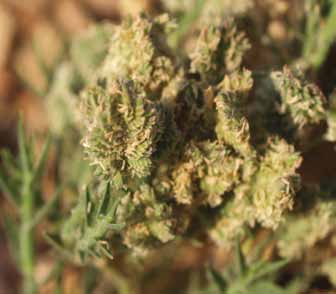
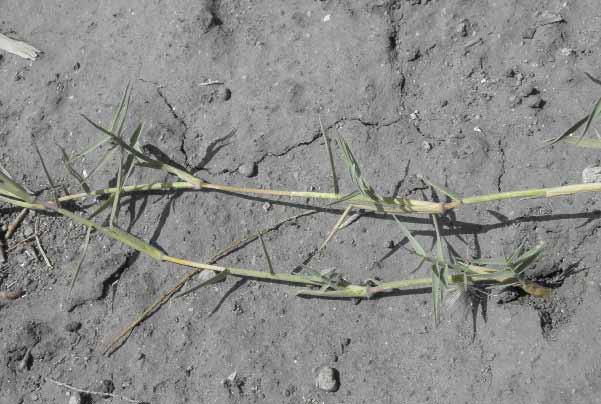
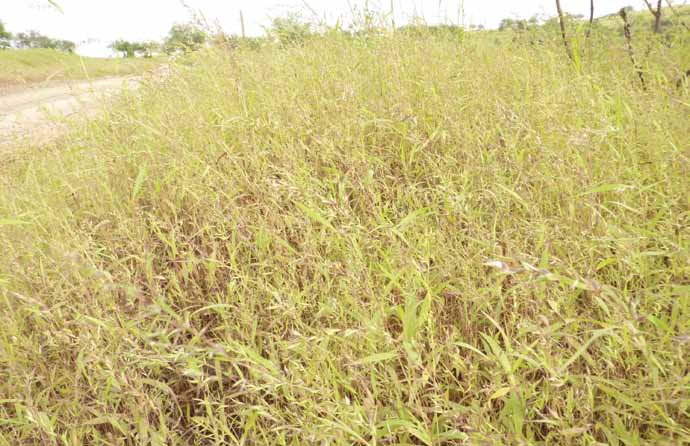
A low, mat-forming perennial grass spreading by whitish, much-branched rhizomes and surface stolons that root at the nodes; flowering stems reach about 30 cm. Leaves are short, stiff, pointed, grey-green, hairless or softly hairy, with a ring of short hairs at the ligule. The inflorescence is a whorl of 3-6 slender, straight, often purplish spikes 2-6 cm long radiating like fingers from the stem tip; spikelets are about 2 mm, one-flowered, laterally compressed and arranged in two rows on one side of the axis. Deep-rooted and very drought tolerant; flowers in summer.
Habitat
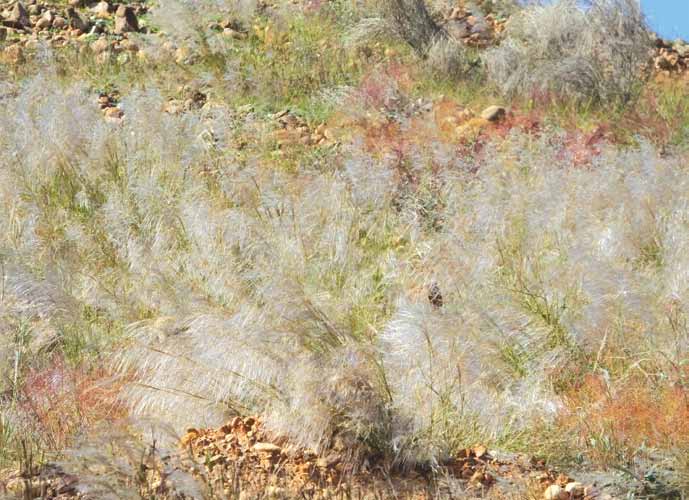
Mainly irrigated land, damp sandy ground, field margins, wadi beds and roadsides; tolerates drought, heat, saline soil and heavy trampling but not dense shade.
Distribution
Probably native to East Africa. Found worldwide across Europe, Africa, Australia, much of Asia. Introduced to the Americas.
Pastoral value
Highly tolerant to drought and heavy grazing, extremely valuable for pasture. Used for cut-and-carry, hay and deferred feed. One of the most important forage grasses in warm regions.
Other uses
Widely planted as turf for lawns and sports fields because it recovers quickly from damage, and used for soil conservation. Traditionally used in folk medicine as a diuretic and for wounds and dysentery. Sacred in Hindu worship (durva grass).
Sources
- الدليل الحقلي المصور للنباتات البرية في سلطنة عُمان (BOOK.pdf p.157)
- Feedipedia - Bermuda grass (Cynodon dactylon) — feedipedia.org
- Plants For A Future - Cynodon dactylon — pfaf.org
- Wikipedia - Cynodon dactylon — en.wikipedia.org