Cymbopogon schoenanthus (L.) Spreng.
صخرب، الأذخر
For people
- Eaten by people
- Unknown
- Toxic to people
- Unknown
For livestock
- Grazed by livestock
- Good fodder
- Toxic to livestock
- Not toxic
Edibility and safety notes
Not eaten as a food. The aromatic leaves and flower heads are widely infused as a herbal tea, mostly for medicinal purposes, but only one weak source for food or flavouring use was found, so edibility is left as unknown. Traditional use of the flower heads to induce abortion is recorded, so pregnant women should not drink it. No poisoning is reported. The source field guide says livestock graze it well, and it is listed among rangeland feed grasses elsewhere.
This guide is a hobby project, not expert advice. Never eat a wild plant, or feed it to animals, on the strength of this page alone. Read the disclaimer
Description
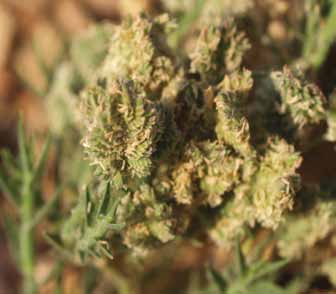
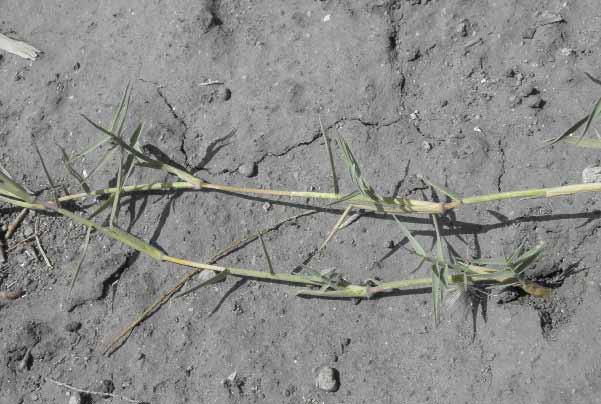
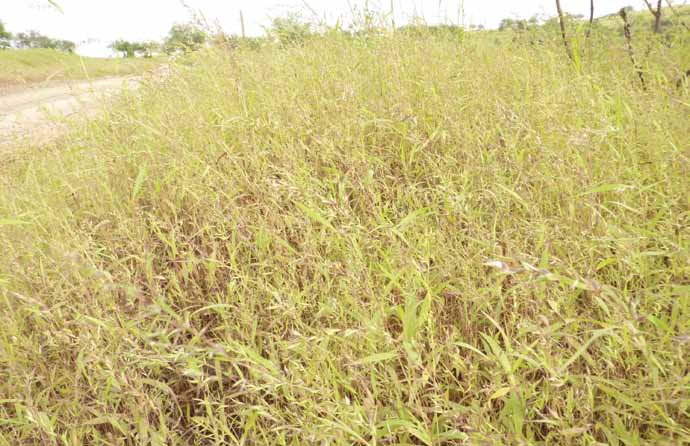
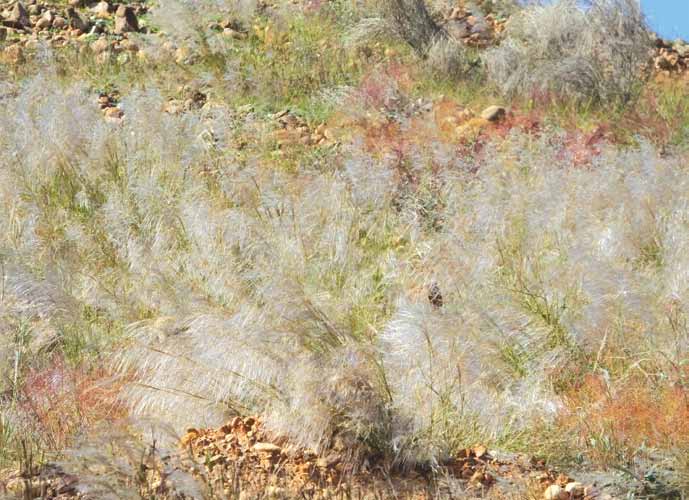
A densely tufted, strongly aromatic perennial grass. Stems are erect, 30-60 cm tall, sheathed at the base by the remains of old leaf sheaths. Leaf blades are narrowly linear to thread-like, rough, grey-green, up to 30 cm long and 1-3 mm wide. The spikelets are borne in narrow elongated panicles 10-40 cm long made up of paired short racemes, each pair enclosed by a broad bladeless leaf sheath. Spikelets are in pairs: one stalked, male or sterile, 4-7 mm long and awnless; the other stalkless, bisexual, with an awn 5-10 mm long. Flowers in spring.
Habitat
Grows in open places in arid, stony soils and sub-desert scrubland.
Distribution
Native to southern Asia and northern Africa, ranging from Mauritania to Egypt, through Arabia and India.
Pastoral value
Grazed by camels and other livestock. Named for its importance as camel forage.
Other uses
Traditionally infused as a herbal tea and used in folk medicine for stomach pain, rheumatism, fever, colds and urinary complaints; in Oman the smoke of burnt leaves and stems is inhaled for influenza. The essential oil (camel grass oil) is used in perfumery and cosmetics. The grass is also used for thatching, matting, lining wells and mixing with clay for building huts.
Sources
- الدليل الحقلي المصور للنباتات البرية في سلطنة عُمان (BOOK.pdf p.156)
- Useful Tropical Plants - Cymbopogon schoenanthus — tropical.theferns.info
- Wikipedia - Cymbopogon schoenanthus — en.wikipedia.org
- Hashim et al. 2017, Biological activity of Cymbopogon schoenanthus essential oil (Saudi J Biol Sci) — pmc.ncbi.nlm.nih.gov
- Livestock feed resources in the West African Sahel (Agronomy Journal 2022) — pmc.ncbi.nlm.nih.gov
- GBIF occurrence records - Cymbopogon schoenanthus in Oman (49 records) — api.gbif.org