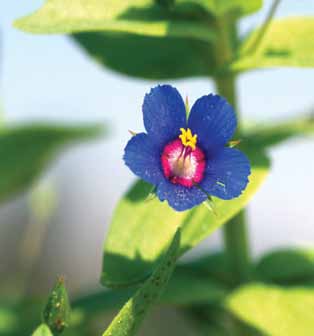
Dionysia mira Wendelbo
شجرات الوعل
For people
- Eaten by people
- Unknown
- Toxic to people
- Unknown
For livestock
- Grazed by livestock
- Not grazed
- Toxic to livestock
- Unknown
Edibility and safety notes
No reliable information on edibility or toxicity for people was found; no food or medicinal use is documented. The field guide lists it as not a grazing plant. It is a rare Omani endemic of mountain rock crevices and should not be collected.
This guide is a hobby project, not expert advice. Never eat a wild plant, or feed it to animals, on the strength of this page alone. Read the disclaimer
Description
A rare perennial of the primrose family (Primulaceae), endemic to the Hajar Mountains of Oman, growing in rock crevices and on cliffs. Unlike most species of its genus it does not form a tight cushion but lax rosettes. Leaves are comparatively large, oblong to oblanceolate, 25-90 mm long, weakly toothed, glandular-hairy on both sides and white-powdery beneath. Flowers are yellow, 7-9 mm across, arranged in 3-7 whorls. Flowers in early spring.
Habitat
Rock crevices and cliffs in the mountains, at about 1500-1900 m.
Distribution
Endemic to Oman, one of about 77 vascular plants exclusive to the country. Found in the Hajar Mountains.
Pastoral value
Not a grazing plant.
Other uses
Of scientific and conservation interest as a rare endemic species. Subject of conservation research.
Sources
- الدليل الحقلي المصور للنباتات البرية في سلطنة عُمان (BOOK.pdf p.172)
- Rock Garden Plants database (kadel.cz) - Dionysia mira — flora.kadel.cz
- Royal Botanic Garden Edinburgh herbarium - type specimen E00024919 (Dionysia mira) — data.rbge.org.uk
- Plants of the World Online - Dionysia Fenzl (genus range incl. Oman) — powo.science.kew.org
- Wikipedia - Dionysia (plant) — en.wikipedia.org(plant)