Datura metel L.
بنج، داتورا، فدة، جوز ماثل
For people
- Eaten by people
- Not edible
- Toxic to people
- Toxic
For livestock
- Grazed by livestock
- Not grazed
- Toxic to livestock
- Toxic
Edibility and safety notes
Extremely poisonous: all parts, especially seeds and leaves, contain tropane alkaloids (hyoscyamine, hyoscine, atropine). Eating, smoking or drinking any preparation causes dry mouth, blurred vision, racing or irregular heartbeat, confusion and hallucinations, and can end in coma and death; hospital cases and deaths are not uncommon. Never taste it or use it as a home remedy, and keep children away from the seed capsules. Livestock do not graze it, and it can be fatal to livestock and pets if eaten, for example mixed into fodder.
This guide is a hobby project, not expert advice. Never eat a wild plant, or feed it to animals, on the strength of this page alone. Read the disclaimer
Description
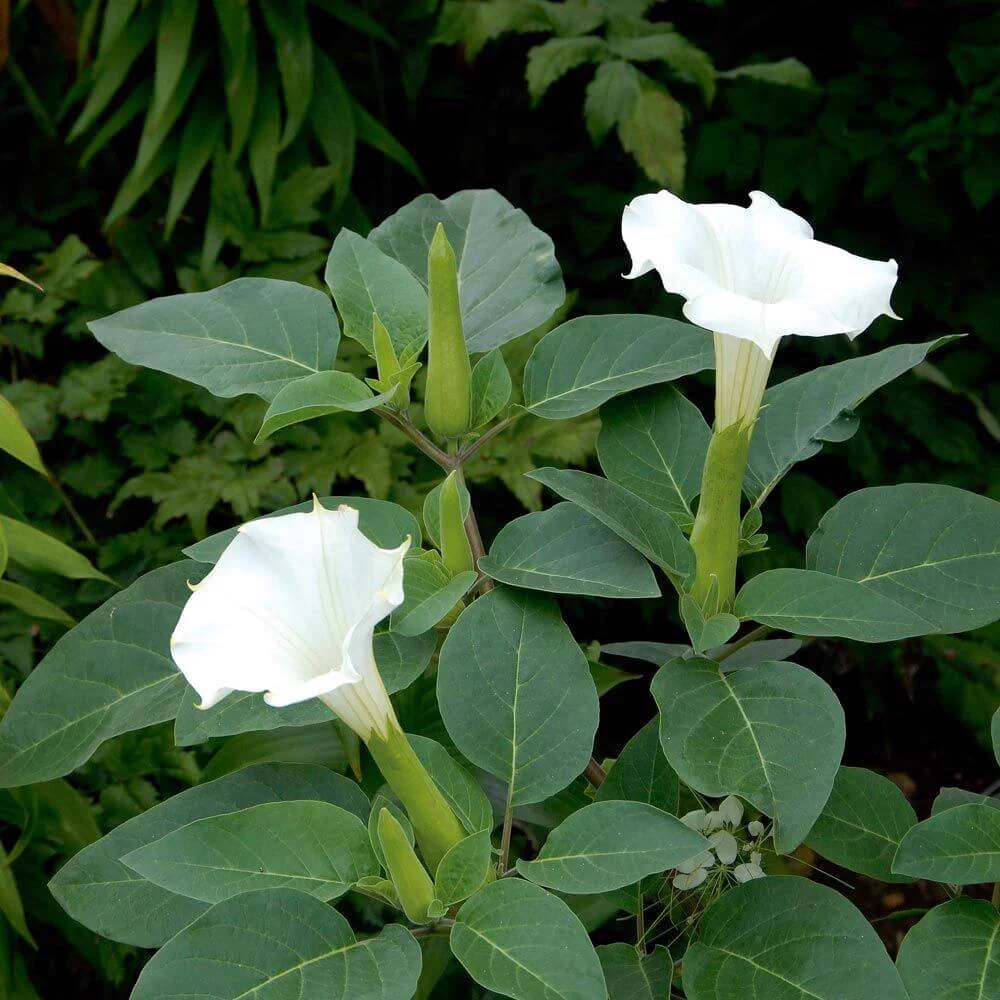
A shrub up to 1.4 m tall with slightly furry stems and dark violet young shoots. Leaves are oval to broad oval, often dark violet. Trumpet-shaped flowers are 18 cm long, white, violet or yellow, facing upward with sweet overpowering fragrance. Fruits are knobby with blunt protuberances.
Habitat
Grows in tropical and subtropical regions, disturbed habitats, roadsides and waste areas.
Distribution
Now generally regarded as native to tropical America (a truly wild form is unknown) and introduced long ago to the tropics and subtropics of the Old World, including India, Africa, the Mediterranean and Arabia; an Asian origin was formerly assumed and is still argued by some authors. In Oman it is recorded from Dhofar.
Pastoral value
Not grazed. Poisonous to livestock and pets if eaten.
Other uses
All parts are highly toxic. Traditionally used in Ayurvedic, Chinese and African folk medicine, for example dried leaves and flowers smoked for asthma and cough, despite the narrow margin between an active and a poisonous dose. Seeds and extracts have been used as rat bait and insecticide. Widely grown as an ornamental.
Sources
- الدليل الحقلي المصور للنباتات البرية في سلطنة عُمان (BOOK.pdf p.186)
- PROTA (Plant Resources of Tropical Africa) - Datura metel — plantuse.plantnet.org(PROTA)
- Plants For A Future - Datura metel — pfaf.org
- Wikipedia - Datura metel — en.wikipedia.org
- GBIF occurrence records - Datura metel in Oman (30 records) — api.gbif.org