Lasiurus scindicus Henrard
ضعه، خطي، اله، سمط
For people
- Eaten by people
- Unknown
- Toxic to people
- Unknown
For livestock
- Grazed by livestock
- Good fodder
- Toxic to livestock
- Not toxic
Edibility and safety notes
A coarse perennial desert grass; no source records people eating any part of it, so the old 'edible' flag reflected its value as animal fodder, not human food. It is one of the most valued forage grasses of the Arabian and Saharan deserts, relished by sheep, goats, camels, cattle and horses, with no toxicity or anti-nutritional factors reported, though it is low in protein when dry.
This guide is a hobby project, not expert advice. Never eat a wild plant, or feed it to animals, on the strength of this page alone. Read the disclaimer
Description
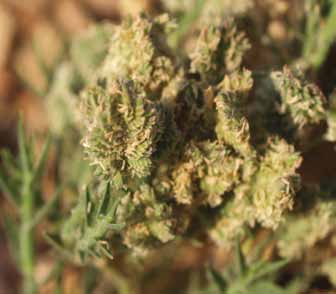
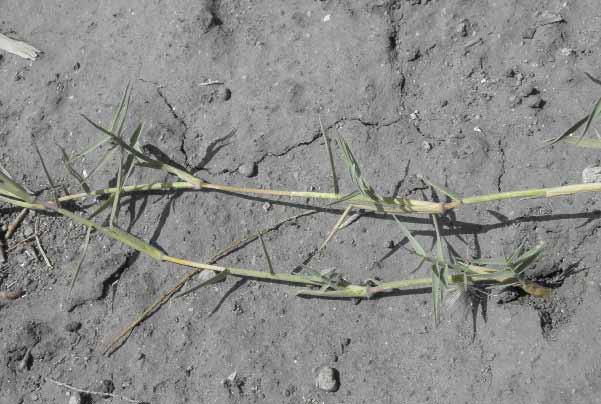
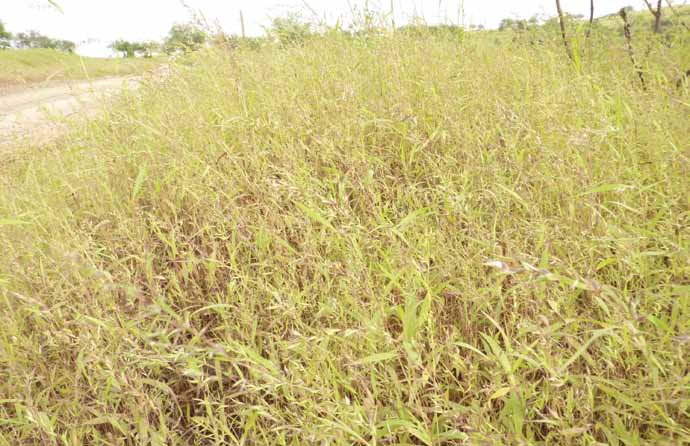
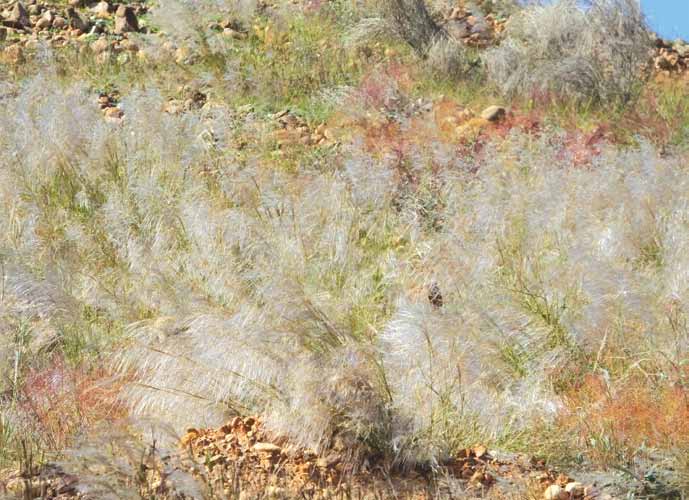
A perennial grass with stems often woody at the base, growing up to 90 cm tall from a thick woody rhizome covered with firm, imbricate cataphylls. Racemes grow up to 10 cm long, silky-villous, with sessile spikelets 6-13 mm long.
Habitat
Desert and dry shrublands, wastelands, sand dunes, hammocks, and sandy plains in arid and semi-arid regions.
Distribution
Native to drier regions of northern Africa and southwestern Asia, from Morocco and Mali eastward to northwest India (Sahara to Northwest India).
Pastoral value
Highly valued forage grass in arid environments with good nutritional value, high digestibility and palatability. Acts as a soil binder and tolerates high temperatures and prolonged drought, making it one of the most important pastoral species in arid regions.
Other uses
Used for soil stabilization and sand dune fixation. Important for biodiversity conservation in arid and semi-arid areas.
Sources
- الدليل الحقلي المصور للنباتات البرية في سلطنة عُمان (BOOK.pdf p.160)
- POWO — Lasiurus scindicus Henrard — powo.science.kew.org
- Feedipedia — Sewan grass (Lasiurus scindicus) — feedipedia.org
- Flora of Qatar — Lasiurus scindicus — floraofqatar.com
- Wikipedia — Lasiurus scindicus — en.wikipedia.org