Malva parviflora L.
خبيز، خبازة، خباز، قرص الحمام
For people
- Eaten by people
- Edible
- Toxic to people
- Not toxic
For livestock
- Grazed by livestock
- Limited fodder
- Toxic to livestock
- Toxic
Edibility and safety notes
Widely eaten as a wild vegetable (khubaiza): leaves and young shoots raw or cooked (mild, chard-like), and the immature seeds raw or in soups. Harmless for people in normal amounts, but the plant accumulates nitrates on manured or fertilised ground, so avoid plants from such sites. For livestock it is a mixed case: sheep, goats and cattle graze it, but horses and ponies grazing mallow-dominated pasture have died of muscle disease (Australian veterinary reports), and nitrate accumulation can poison cattle and poultry. Do not let horses graze it heavily.
This guide is a hobby project, not expert advice. Never eat a wild plant, or feed it to animals, on the strength of this page alone. Read the disclaimer
Description
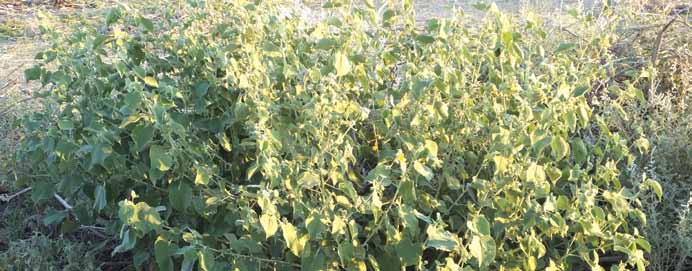
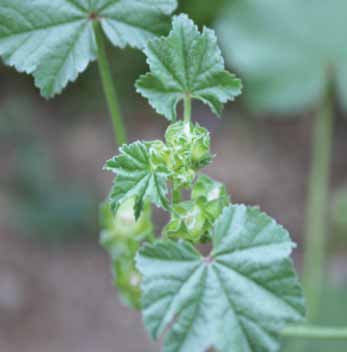
An annual or perennial herb with a decumbent or erect habit, growing up to 50-80 cm. Broad leaves with 5-7 shallow lobes, 8-10 cm in diameter. Small white or pink flowers with 4-10 mm petals appear year-round at the base of leaf stalks. The plant develops a deep taproot.
Habitat
Agricultural lands, disturbed sites, roadsides, gardens, and waste areas. Adaptable to various soil types.
Distribution
Native to northern Africa, southern Europe, and western and central Asia. Widely naturalized in North America, Australia, and other temperate and subtropical regions.
Pastoral value
Grazed by sheep, goats and cattle, but it accumulates nitrates on fertilised ground (toxic to cattle and poultry in quantity) and has caused fatal muscle disease in horses and ponies grazing mallow-dominated pasture.
Other uses
Entire plant is edible raw or cooked with mild flavor similar to chard. Used in traditional medicine as infusions, decoctions, and poultices to treat wounds and digestive problems. Plant extracts have antimicrobial, antifungal, antioxidant, and anti-inflammatory properties.
Sources
- الدليل الحقلي المصور للنباتات البرية في سلطنة عُمان (BOOK.pdf p.138)
- Wikipedia — Malva parviflora — en.wikipedia.org
- Plants For A Future — Malva parviflora — pfaf.org
- Useful Tropical Plants — Malva parviflora — tropical.theferns.info
- Flora of Qatar — Malva parviflora — floraofqatar.com
- Bauquier et al. 2025, Aust Vet J: Suspected marsh mallow (Malva parviflora) toxicosis in ponies (PMID 40506390) — doi.org
- GBIF occurrences of Malva parviflora in Oman (16 records: Muscat, Musandam, Jabal Akhdar) — api.gbif.org
- UC IPM: Little mallow (cheeseweed) — ipm.ucanr.edu