Malva neglecta Waller.
خبيز، اخلبيز
For people
- Eaten by people
- Edible
- Toxic to people
- Not toxic
For livestock
- Grazed by livestock
- Unknown
- Toxic to livestock
- Unknown
Edibility and safety notes
A well-known wild vegetable (khubbaza/khubaiza): young leaves and shoots are eaten raw or cooked like spinach, and the immature seeds ("cheeses") are eaten raw. It is generally harmless, but like other mallows it accumulates nitrates when growing on heavily manured or fertilised ground, so avoid such plants and do not feed large amounts to infants. No reliable source on its value as livestock feed or on poisoning by this species was found, but the closely related Malva parviflora can poison cattle through nitrate build-up and has harmed horses, so treat heavy mallow pasture with caution.
This guide is a hobby project, not expert advice. Never eat a wild plant, or feed it to animals, on the strength of this page alone. Read the disclaimer
Description
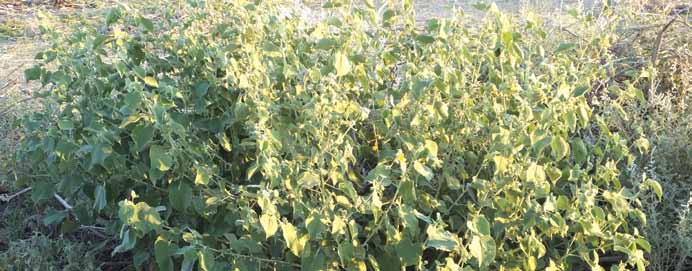
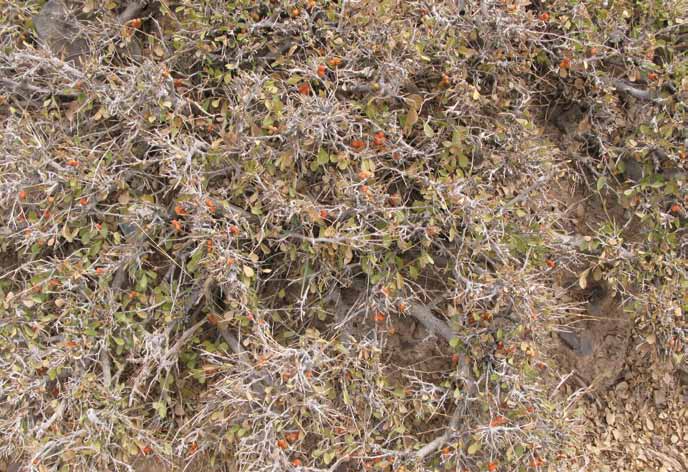
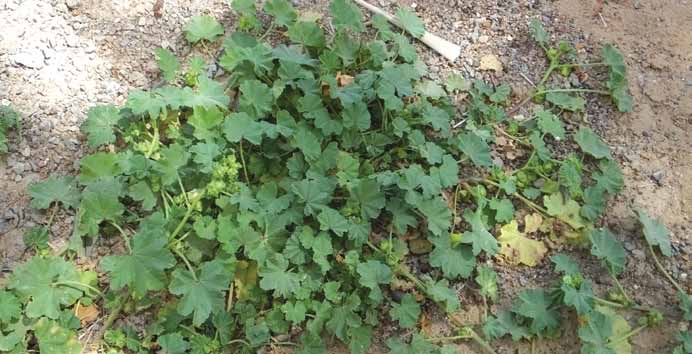
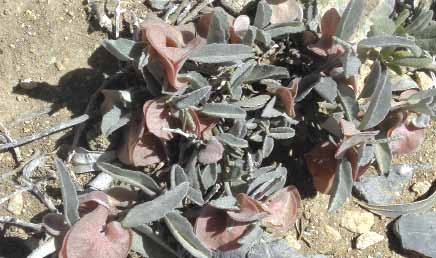
A prostrate, downy annual herb growing to approximately 60 cm. Leaves are alternate, orbicular to kidney-shaped with 5 or more shallow lobes and crenate margins. Flowers are about 2 cm across with 5 slightly notched petals, light violet or white with pale violet veins.
Habitat
Disturbed areas including cropland, abandoned fields, vacant lots, roadsides, edges of yards and gardens. Grows in sandy, loamy, and clay soils, preferring well-drained conditions in semi-shade to full sun.
Distribution
Native to most of the Old World (Europe, western Asia, northern Africa) except sub-Saharan Africa. Widely introduced and naturalized in North America and other temperate regions.
Pastoral value
Palatable to livestock and grazed by cattle, sheep, and goats. Considered a weed in pastures but consumed when available.
Other uses
Leaves, stalks, and seeds are edible; seeds contain 21% protein and 15.2% fat. Used medicinally for catarrh, enteritis, sore throat, hoarse voice, and as an expectorant. Dyes can be obtained from the plant and seed heads.
Sources
- الدليل الحقلي المصور للنباتات البرية في سلطنة عُمان (BOOK.pdf p.137)
- Plants For A Future — Malva neglecta — pfaf.org
- Wikipedia — Malva neglecta — en.wikipedia.org
- GBIF backbone — Malva neglecta Wallr. (accepted, Malvaceae) — api.gbif.org
- GBIF occurrences of Malva neglecta in Oman (Edinburgh herbarium, Wadi Bani Habib 1993) — api.gbif.org
- UC IPM: Little mallow (cheeseweed) — ipm.ucanr.edu