Abutilon pannosum (G.Forst.) Schltdl.
For people
- Eaten by people
- Unknown
- Toxic to people
- Unknown
For livestock
- Grazed by livestock
- Limited fodder
- Toxic to livestock
- Unknown
Edibility and safety notes
No reliable source documents people eating this plant as food, so its edibility is unknown; do not eat it. The book says livestock do not graze it, but in Oman the chopped plant is traditionally cooked with dates, grain and small fish and fed to cattle to increase milk. Roots, leaves and seeds are used only in folk medicine (dysentery, laxative), which is not evidence of safety.
This guide is a hobby project, not expert advice. Never eat a wild plant, or feed it to animals, on the strength of this page alone. Read the disclaimer
Description
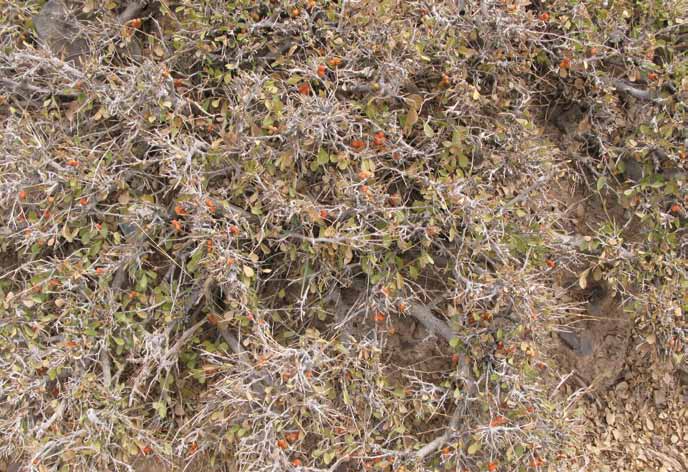
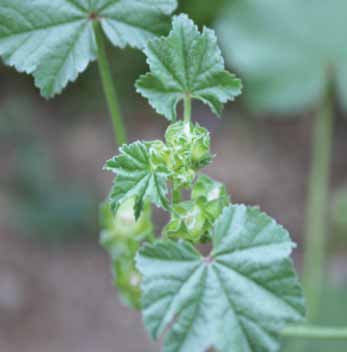
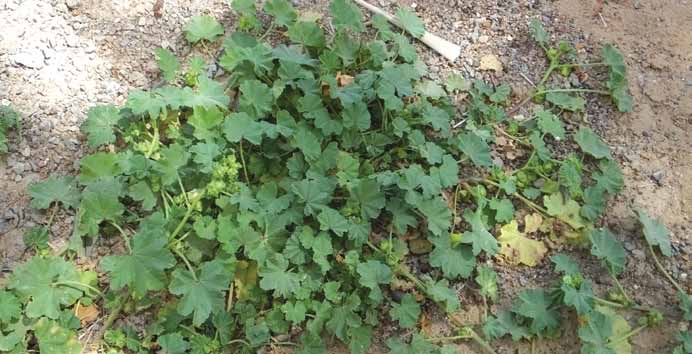
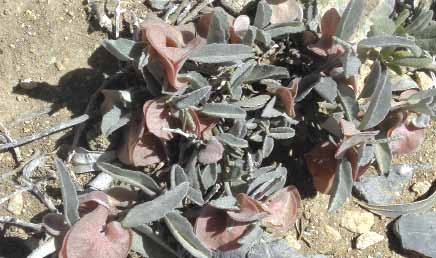
A shrub up to 2 m tall or more, covered with short white to grey woolly hairs and appressed stellate hairs, with short glandular hairs on the flower stalks and young branches. Stems much branched, cylindrical below and angular above. Leaves 5-8 x 4-7 cm, long-stalked, ovate-cordate, acute to acuminate, toothed to slightly lobed; lower surface grey to yellowish and woolly, upper surface darker, softly hairy and prominently veined. Flowers axillary or terminal, the lower solitary and the upper clustered, about 3.5 cm across; calyx bell-shaped, five-lobed; corolla yellow or pinkish, at least twice as long as the calyx. The stamens are fused into a column. The fruit is a schizocarp of 25-35 blackish-brown mericarps about 1 cm long with truncate or rounded tips; seeds kidney-shaped, about 2 mm. Flowers from May to August.
Habitat
Oases in hot deserts, irrigated land and places near water.
Distribution
Tropical: Egypt, the Arabian Peninsula, Iraq, Iran, Pakistan, Afghanistan, India, Sudan, Nigeria and Senegal.
Pastoral value
Not a grazing plant.
Other uses
In Oman the plant is traditionally chopped very finely and cooked in water with dates, grain and small fish, then fed to livestock and cattle to increase milk yield and fattening. In folk medicine the powdered root, suspended in water, was traditionally used for dysentery, and a paste of the leaves with water and pepper for gonorrhoea.
Sources
- كتاب نباتات عمان
- Wikipedia - Abutilon pannosum — en.wikipedia.org
- POWO - Abutilon pannosum var. pannosum (range: Cape Verde to Arabian Peninsula, Indian Subcontinent) — powo.science.kew.org
- PMC - Qatar medicinal plant survey, table listing Abutilon pannosum (dysentery, gonorrhoea) — pmc.ncbi.nlm.nih.gov