Panicum turgidum Forssk.
الثمام، ثمام، عجلة
For people
- Eaten by people
- Edible
- Toxic to people
- Unknown
For livestock
- Grazed by livestock
- Good fodder
- Toxic to livestock
- Not toxic
Edibility and safety notes
The small millet-like grain is a traditional famine food in the Sahara and Sahel: it is collected from wild plants, ground into meal and boiled as porridge. The grain stays enclosed in a tough husk and must be threshed and ground first; no food use was found for Oman. Young green growth is palatable to all livestock; once dry and fibrous it is eaten mainly by camels and donkeys. No toxic constituents are reported.
This guide is a hobby project, not expert advice. Never eat a wild plant, or feed it to animals, on the strength of this page alone. Read the disclaimer
Description
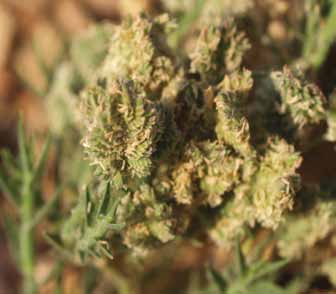
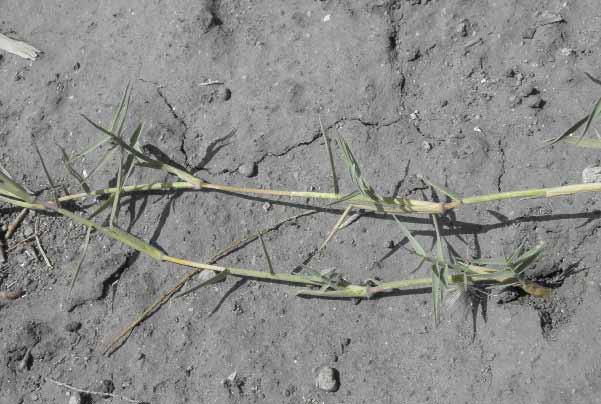
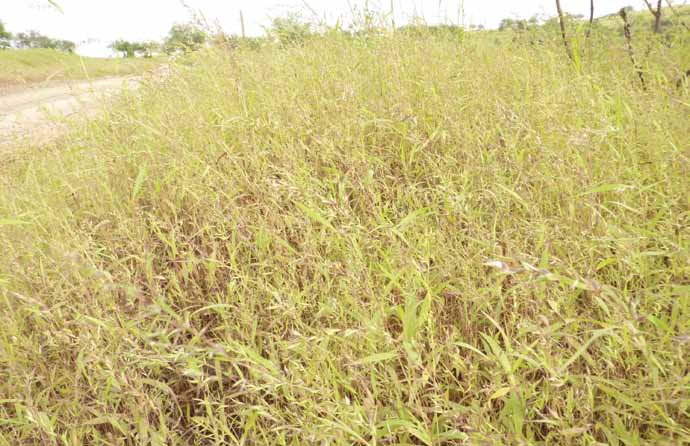
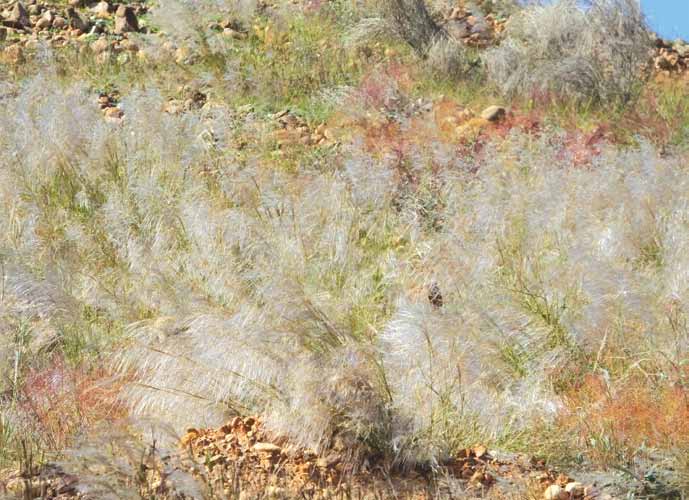
A coarse, woody, tussocky perennial bunchgrass growing to 1.5-2 m tall in dense clumps. Has a stout fibrous root system growing to 2 m deep. Stems are long-jointed, hard and polished, resembling bamboo shoots, with few leaves.
Habitat
Desert depressions, river beds, deep sand dunes, sandy plains, seashores, wadi edges, oases, and coastal lowlands. Thrives in arid conditions with 200-400 mm annual rainfall and temperatures of 25-35 C.
Distribution
Common across the Sahara and Arabia, from Senegal to Pakistan, including northern and northeastern Africa, Saudi Arabia, Iran, and Pakistan.
Pastoral value
Highly valuable fodder for small ruminants, camels, and donkeys. Drought and salt tolerant forage species of great importance in arid rangelands.
Other uses
The grain is eaten by people in times of scarcity (ground into meal and boiled as porridge) and by birds. Stems are used for thatching and mat-making; the roots yield a tanning agent. Important for erosion control, rangeland rehabilitation and sand-dune stabilisation.
Sources
- الدليل الحقلي المصور للنباتات البرية في سلطنة عُمان (BOOK.pdf p.162)
- Feedipedia - Desert grass (Panicum turgidum) — feedipedia.org
- PROTA - Panicum turgidum — uses.plantnet-project.org(PROTA)
- Feedipedia (FAO review site) - Panicum turgidum forage — feedipedia.review.fao.org
- Feedipedia - Desert grass (Panicum turgidum) — feedipedia.org
- Useful Tropical Plants - Panicum turgidum — tropical.theferns.info
- Plants For A Future - Panicum turgidum — pfaf.org
- Wikipedia - Panicum turgidum — en.wikipedia.org