
Pergularia tomentosa L.
غلقة، شجرة الجلود، غيجة، آرام
For people
- Eaten by people
- Not edible
- Toxic to people
- Toxic
For livestock
- Grazed by livestock
- Limited fodder
- Toxic to livestock
- Toxic
Edibility and safety notes
Do not eat any part. All parts contain heart-active cardenolide glycosides, and the plant has been used as a purgative and abortifacient. The milky latex is corrosive: it can severely harm the skin, causes swelling on broken skin, and causes pain and inflammation if it reaches the eyes, so wash hands after handling. Livestock normally avoid it and take it only when dry or when nothing else is available; poisoning and deaths of goats and other ruminants are reported from Niger.
This guide is a hobby project, not expert advice. Never eat a wild plant, or feed it to animals, on the strength of this page alone. Read the disclaimer
Description
A perennial scrambling twiner or small shrub of the Apocynaceae family, growing to 0.8 m. Stems and inflorescences are tomentose (covered with dense matted hairs). Leaves are broadly ovate to suborbicular, 1-2.5 cm, tomentose on both surfaces with silvery grey appearance.
Habitat
Deserts with rainfall often not exceeding 100 mm/year, in wadi beds and plateau areas, on clayey to sandy, gravelly and stony soils, from sea level to 1000 m altitude.
Distribution
Widely distributed across the Sahara, Horn of Africa, Sinai, Israel, Jordan, Arabian Peninsula, and eastward to southern and eastern Iran, Afghanistan, and Pakistan.
Pastoral value
Unpalatable; animals resort to it only in necessity and when it is dry. Livestock poisoning has been reported.
Other uses
Stems and shoots are used to loosen the hair from hides before tanning. The sticky latex was traditionally applied to skin sores (it is painful, so only on adults and livestock) and crushed leaves to skin infections; the latex is also used as a depilatory. Elsewhere it has been traditionally used as a purgative, expectorant and vermifuge, and to curdle milk for cheese.
Sources
- الدليل الحقلي المصور للنباتات البرية في سلطنة عُمان (BOOK.pdf p.34)
- PROTA - Pergularia tomentosa — uses.plantnet-project.org(PROTA)
- Abu Dhabi Department of Health, Encyclopedia of Medicinal Plants of the UAE - Pergularia tomentosa — medicinalplants.doh.gov.ae
- Abiola et al. 1993 - experimental poisoning of goats by Pergularia tomentosa (Revue Elev. Med. vet. Pays trop.) — revues.cirad.fr
From the same family
All in this family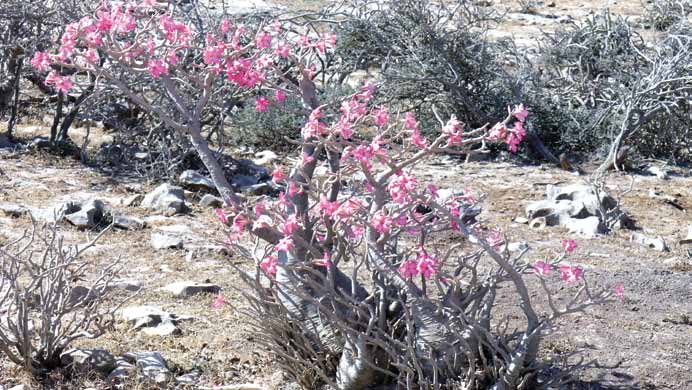
Apocynaceae
Desert rose, Impala lily, Sabi star, Mock azalea
Adenium obesum (Forssk.) Roem. & Schult.
Apiaceae
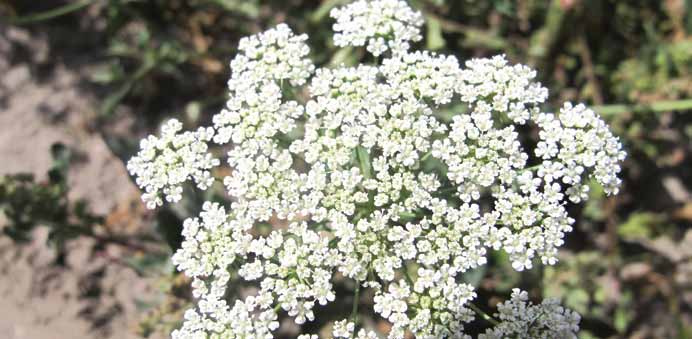
Bishop's weed, False Queen Anne's lace, Greater ammi, Bishop's flower
Ammi majus L.
Apocynaceae
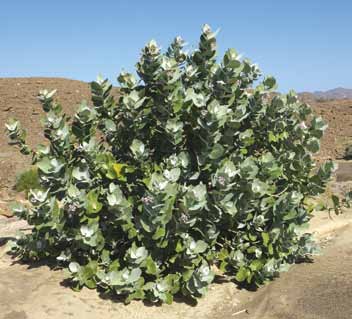
Apple of Sodom, Calotrope, Giant milkweed, Sodom apple
Calotropis procera (Aiton) Dryand
Apocynaceae
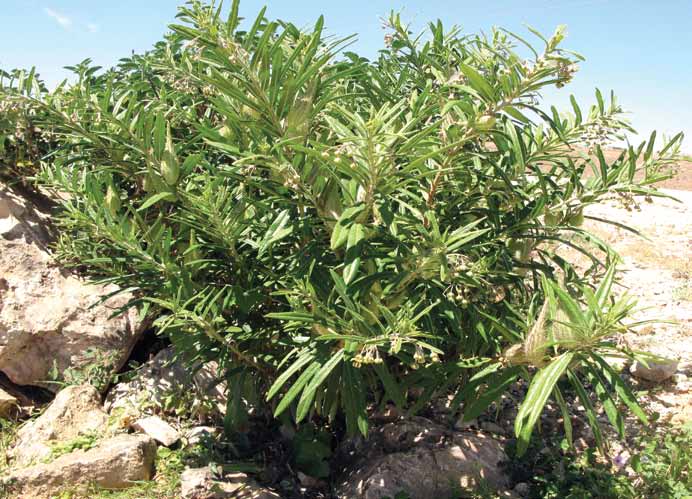
Milkweed, Narrow-leaved cotton bush, Balloon cotton bush, Swan plant
Gomphocarpus fruticosus (L.) W.T.Aiton