Setaria pumila (Poir.) Roem. & Schult.
ذيل الثعلب، ايثغيل، حجروم
For people
- Eaten by people
- Unknown
- Toxic to people
- Unknown
For livestock
- Grazed by livestock
- Unknown
- Toxic to livestock
- Toxic
Edibility and safety notes
No reliable confirmation was found that this grass is a human food: a single plant database says the cooked grain can be used like rice or ground for porridge, and it is not a customary food in Oman, so it is not recommended for eating. The Omani book rates it good grazing, but its forage value could not be confirmed from other sources. Mature seed heads are reported to be a hazard for livestock: the barbed bristles can lodge in the mouth and cause ulcers in horses and cattle, especially in hay.
This guide is a hobby project, not expert advice. Never eat a wild plant, or feed it to animals, on the strength of this page alone. Read the disclaimer
Description
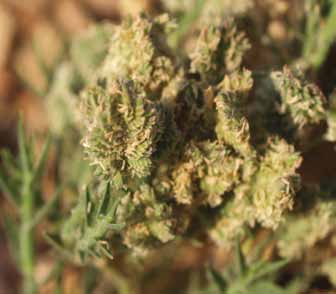
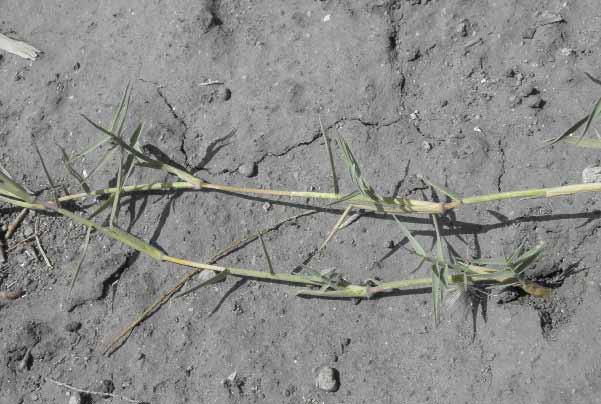
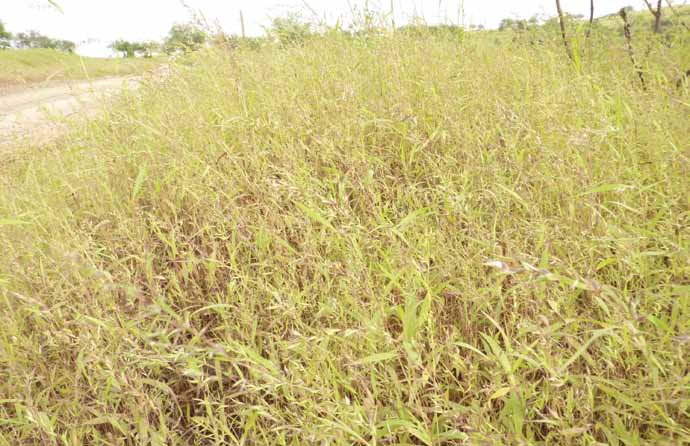
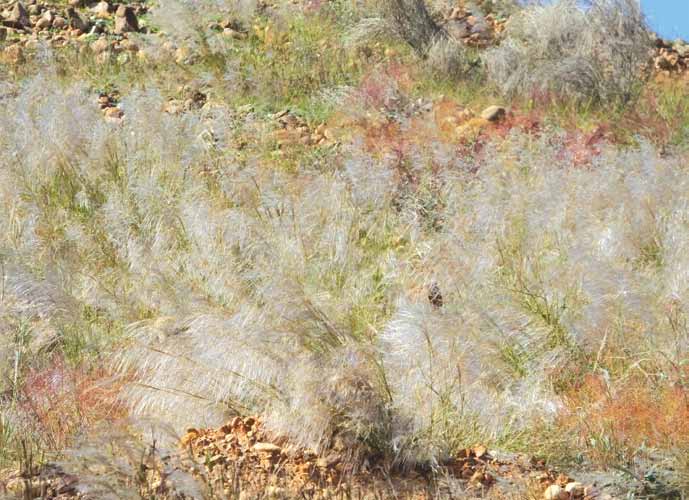
An annual, tufted grass, usually 5-45 cm tall and rarely reaching 150 cm. Leaf blades 5-15 (-30) cm long and 3-6 (-10) mm wide. The inflorescence is a dense, cylindrical, spike-like panicle with yellow bristles 3-12 mm long. Spikelets ovate, 1.5-3.5 mm long; the glumes are shorter than the spikelet, one-third to two-thirds of its length. The lower floret is male or sterile; the upper lemma is usually strongly wrinkled, rarely finely wrinkled.
Habitat
Edges of irrigation channels and cultivated land; a weed of fields, waste ground and roadsides.
Distribution
Tropical and warm-temperate regions of the Old World, and introduced in many other regions. Occurs in scattered groups in agricultural areas of Saudi Arabia, and in Oman.
Pastoral value
Good grazing; livestock readily eat the young plants. The bristly mature seed heads can injure the mouths of horses and cattle, particularly in hay.
Sources
- كتاب نباتات عمان
- Useful Temperate Plants - Setaria pumila — temperate.theferns.info
- Purdue University Famine Foods - Setaria glauca — purdue.edu
- HerbiGuide - Pigeon Grass (Setaria spp., incl. S. pumila): oxalate toxicity — herbiguide.com.au
- Bugwood HPIPM - Yellow foxtail (stomatitis in cattle and horses) — wiki.bugwood.org
- USGS Plant ID - Setaria pumila (palatability, wildlife use) — warcapps.usgs.gov
- Kansas Wildflowers and Grasses - Yellow foxtail — kswildflower.org
- Useful Tropical Plants – Setaria pumila — tropical.theferns.info
- Plants For A Future – Setaria pumila — pfaf.org