
Acacia nilotica (L.) Del.
طلح، قُرط، قرياط، قرض، سنط
For people
- Eaten by people
- Edible
- Toxic to people
- Unknown
For livestock
- Grazed by livestock
- Good fodder
- Toxic to livestock
- Toxic
Edibility and safety notes
People eat the gum from the trunk (in sweets, or fried), young pods, young leaves and shoots cooked as vegetables, and roasted seeds as a condiment or coffee substitute. All parts are very rich in tannins: they are astringent, can upset the stomach in quantity, and the ripe pods and bark are used medicinally, not as food. Leaves and pods are readily eaten by camels, goats, sheep and cattle, but goats have died after eating large amounts of pods (abortion, breathing difficulty), so pods should not be fed freely.
This guide is a hobby project, not expert advice. Never eat a wild plant, or feed it to animals, on the strength of this page alone. Read the disclaimer
Description
A flowering tree 5-20 m high with a dense spherical crown, dark to black coloured stems and branches with fissured bark. Recognized by bright yellow flowers in round heads, straight stipular spines, and dark indehiscent pods compressed over the seeds.
Habitat
Wooded grassland, dry scrub forests, savanna, riverine habitats and seasonally flooded areas. Occurs from sea level to over 2000m and can withstand temperatures above 50°C.
Distribution
Native to Egypt, across the Maghreb and Sahel, south to Mozambique and South Africa, and east through the Arabian Peninsula to the Indian subcontinent and Burma. Widely naturalised in Australia.
Pastoral value
Leaves and pods are browsed by camels, goats, sheep and cattle. All parts are high in tannins, which reduce protein digestibility; fatal poisoning has been reported in goats that ate excessive amounts of pods, so pods should be fed with caution.
Other uses
Gum arabic collected since pharaonic times for medicines, dyes and paints. Wood used for tool handles and boat lumber. Used for leather tanning, biofuel, dyeing. Medicinal uses include treating respiratory, gastrointestinal and skin ailments.
Sources
- الدليل الحقلي المصور للنباتات البرية في سلطنة عُمان (BOOK.pdf p.103)
- Feedipedia - Babul (Acacia nilotica) — feedipedia.org
- Useful Tropical Plants - Acacia nilotica — tropical.theferns.info
- Plants For A Future - Acacia nilotica — pfaf.org
- Wikipedia - Vachellia nilotica — en.wikipedia.org
- Feedipedia - Babul (Acacia nilotica) — feedipedia.org
From the same family
All in this family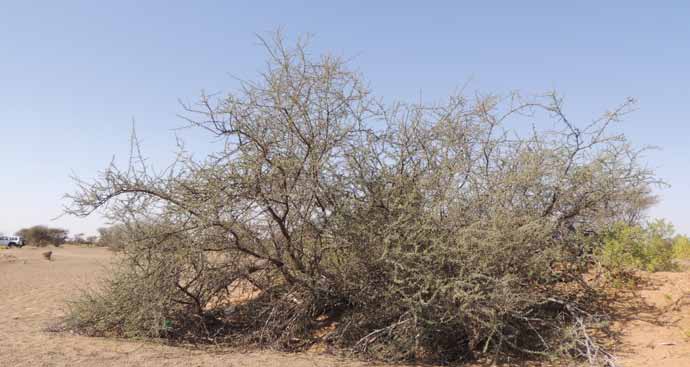
Fabaceae
Salam tree, Desert acacia
Acacia ehrenbergiana Hayne.
Fabaceae
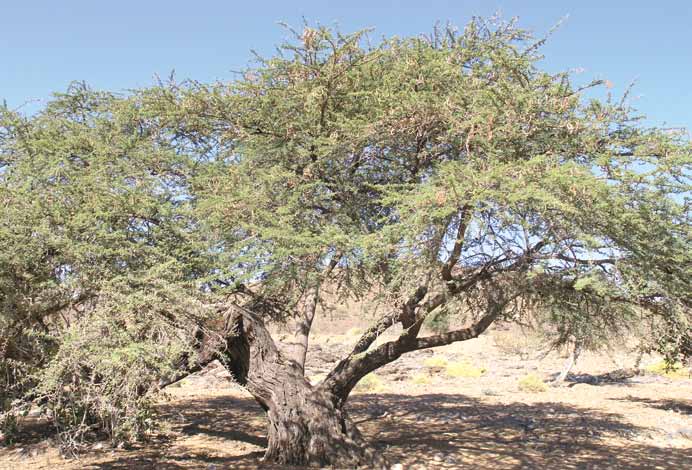
Red thorn, Grey-haired acacia, Talh
Acacia gerrardii Benth.
Fabaceae
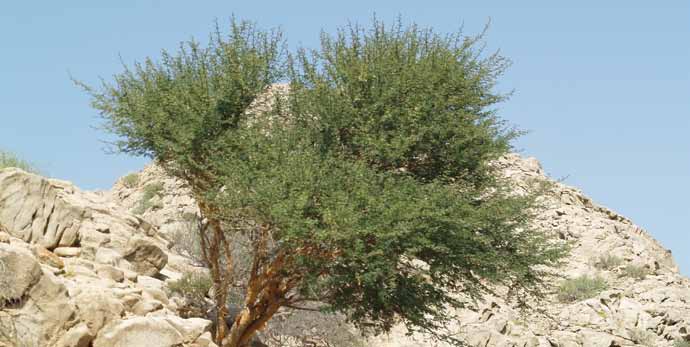
Gum acacia, Gum arabic tree, Sudan gum
Acacia senegal (L.) Willd.
Fabaceae
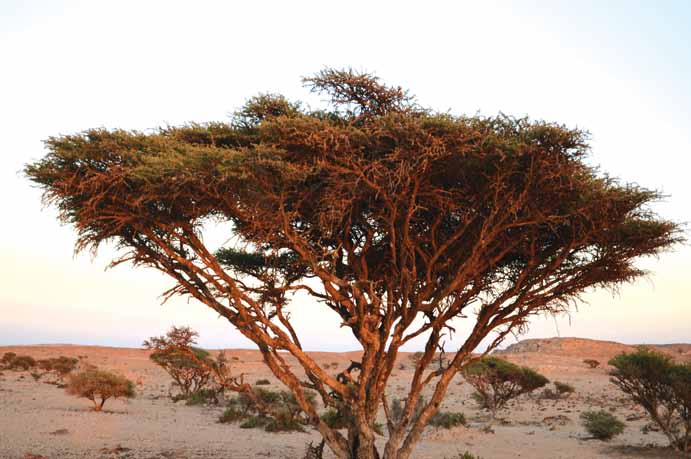
Umbrella thorn, Umbrella thorn acacia, Israeli babool
Acacia tortilis (Forssk.) Hayne.