
Acacia tortilis (Forssk.) Hayne.
سمر، طلح، جروظ، برم سمر، سمرة
For people
- Eaten by people
- Edible
- Toxic to people
- Unknown
For livestock
- Grazed by livestock
- Good fodder
- Toxic to livestock
- Unknown
Edibility and safety notes
A minor, mainly famine food: in East Africa the ripe pods are eaten (seeds discarded) or made into porridge, immature seeds are eaten, and the gum from the stems is edible. It is not a customary food in Oman, and the thorns are sharp. Leaves and pods are a major browse for camels and goats; the foliage is high in tannins, cows fed many pods may give off-flavoured milk, and there are unconfirmed reports that the foliage can be toxic to livestock.
This guide is a hobby project, not expert advice. Never eat a wild plant, or feed it to animals, on the strength of this page alone. Read the disclaimer
Description
A medium to large canopied tree growing up to 20 metres with a spreading, flat-topped umbrella-shaped crown. It has a distinctive combination of paired straight brownish thorns and paired shorter hooked thorns growing alongside each other.
Habitat
Sand dunes, rocky scarps and alluvial valley bottoms, avoiding waterlogged sites. Very drought resistant, growing in areas with annual rainfall as low as 40 mm. Favors alkaline soils but colonizes saline and gypseous soils.
Distribution
Native to most of Africa, primarily the savanna and Sahel, especially the Somali peninsula and Sudan. Also occurs in the Middle East, including Oman and the Arabian Peninsula.
Pastoral value
Dominant browse tree in many savanna communities. Leaves and pods provide important supplementary feed for goats, cattle and camels, improving dry matter intake, digestibility and live-weight gain.
Other uses
The wood is used for cooking fuel and charcoal, and strong branches for fencing and, formerly, boat oars. The flowers are an important nectar source for honey bees (samr honey). The ash was traditionally used to help draw out thorns and to remove hair. The bark yields tannin. In East Africa the pods are eaten as a famine food and made into porridge.
Sources
- الدليل الحقلي المصور للنباتات البرية في سلطنة عُمان (BOOK.pdf p.106)
- Feedipedia - Umbrella thorn (Acacia tortilis) — feedipedia.org
- Useful Tropical Plants - Acacia tortilis — tropical.theferns.info
- Wikipedia - Vachellia tortilis — en.wikipedia.org
- Feedipedia - Umbrella thorn (Acacia tortilis) — feedipedia.org
- Useful Tropical Plants - Vachellia tortilis — tropical.theferns.info
- World Agroforestry tree database - Acacia tortilis (seen in search results) — apps.worldagroforestry.org
From the same family
All in this family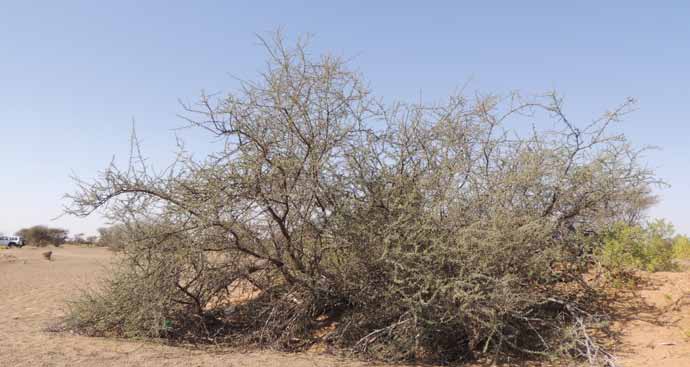
Fabaceae
Salam tree, Desert acacia
Acacia ehrenbergiana Hayne.
Fabaceae
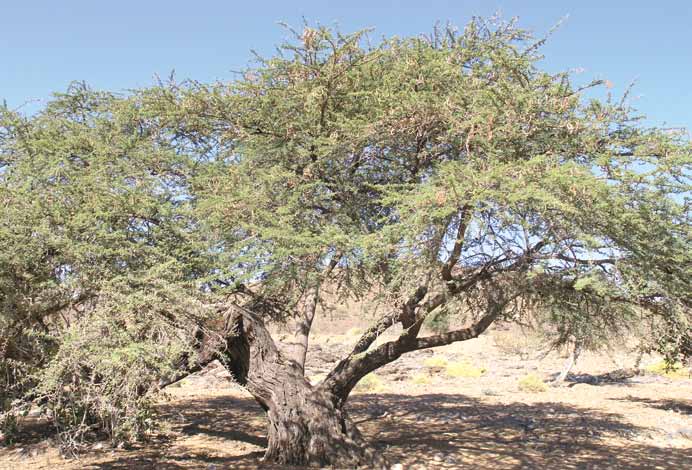
Red thorn, Grey-haired acacia, Talh
Acacia gerrardii Benth.
Fabaceae
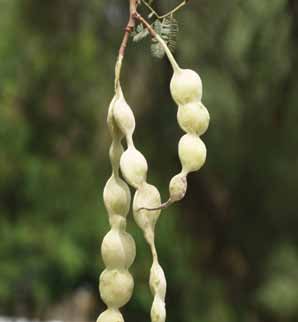
Gum arabic tree, Babul, Thorn mimosa, Egyptian acacia, Thorny acacia
Acacia nilotica (L.) Del.
Fabaceae
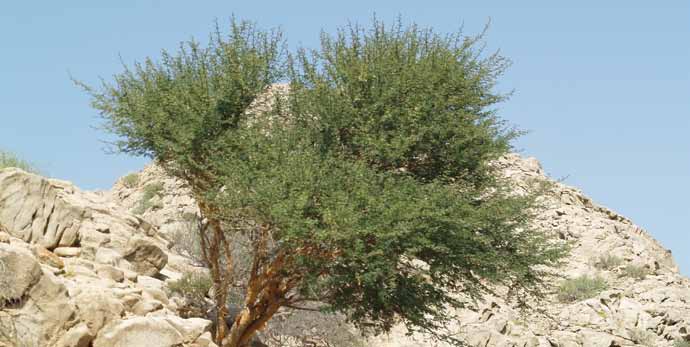
Gum acacia, Gum arabic tree, Sudan gum
Acacia senegal (L.) Willd.