
Aizoon hispanicum L.
مليح، هابرك، دمبم غزال، أرينبة (عدأة، دعدع، هراس)
For people
- Eaten by people
- Unknown
- Toxic to people
- Unknown
For livestock
- Grazed by livestock
- Limited fodder
- Toxic to livestock
- Unknown
Edibility and safety notes
No reliable information was found on whether people can eat this plant or whether it is poisonous, so it should not be eaten. The field guide gives it a low grazing value, eaten by livestock after it dries; no independent information on its safety for animals was found.
This guide is a hobby project, not expert advice. Never eat a wild plant, or feed it to animals, on the strength of this page alone. Read the disclaimer
Description
A sprawling annual herbaceous plant 5 to 20 cm high with opposite, papillose, succulent lanceolate leaves. Solitary flowers have five white tepals, yellowish-green on the outside. Pentagonal fruit capsule uses a unique water jet mechanism to disperse seeds.
Habitat
Grows in compacted sandy soil in desert plains, saline areas and semi-arid regions.
Distribution
Native to Egypt, Israel, Jordan, Syria, Cyprus, Turkey, Iraq, Iran, the Arabian Peninsula, the Mediterranean region and the Canary Islands.
Pastoral value
Low grazing value; grazed after it has dried.
Other uses
No traditional uses are documented. The plant is of botanical interest because its fruit capsule opens when wet and uses raindrops to squirt the seeds out.
Sources
- الدليل الحقلي المصور للنباتات البرية في سلطنة عُمان (BOOK.pdf p.22)
- Wikipedia - Aizoanthemopsis hispanica (Aizoon hispanicum) — en.wikipedia.org
- Flora of Qatar - Aizoon hispanicum (as Aizoanthemum hispanicum) — floraofqatar.com
- Cretan Flora - Aizoon hispanicum species description — cretanflora.com
From the same family
All in this family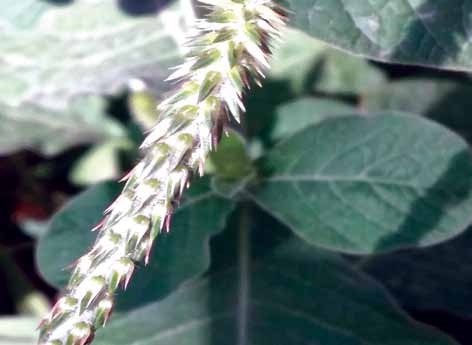
Amaranthaceae
Prickly chaff flower, Devil's horsewhip
Achyranthes aspera L.
Amaranthaceae
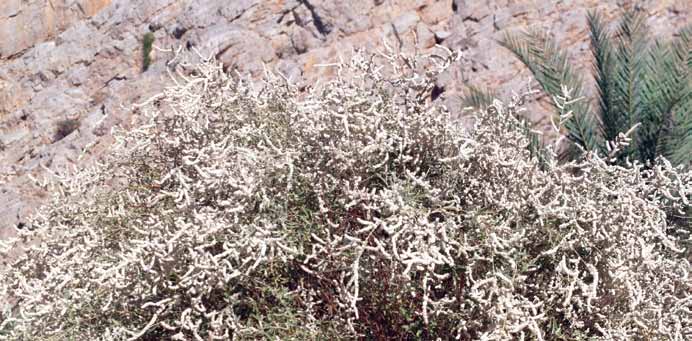
Kapok bush, Desert cotton, Java aerva
Aerva javanica (Burm.f.) Juss. ex Schult.
Aizoaceae
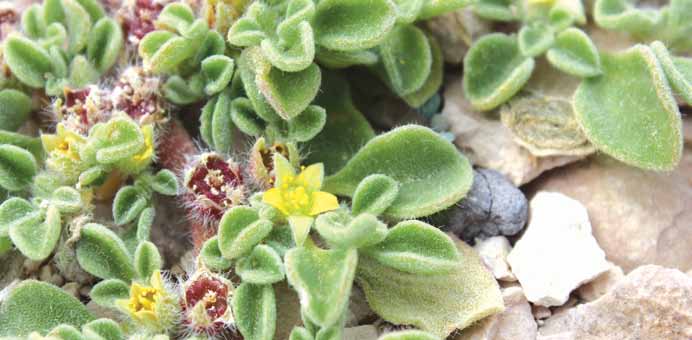
Canary aizoon, Purslane-leaved aizoon
Aizoon canariense L.
Amaranthaceae
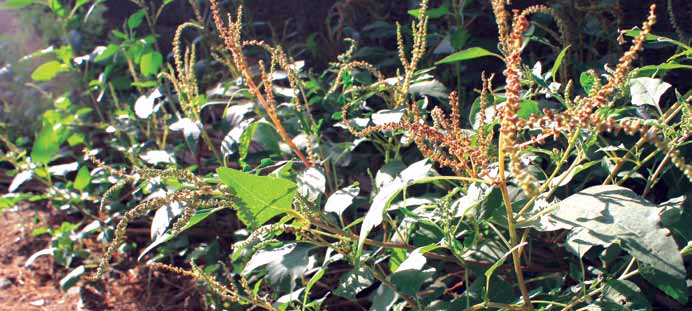
Slender amaranth, Green amaranth, Calalu
Amaranthus viridis L.