Amaranthus viridis L.
سندر، عرف الديك
For people
- Eaten by people
- Edible
- Toxic to people
- Not toxic
For livestock
- Grazed by livestock
- Unknown
- Toxic to livestock
- Unknown
Edibility and safety notes
The young leaves, tender stems and flower clusters are cooked and eaten like spinach, and the tiny seeds can be cooked as a grain or porridge. No amaranth is known to be poisonous to people, but plants growing on heavily fertilised or manured ground can build up nitrates, so do not gather it from fertilised fields or sprayed roadsides, and cook it rather than eating it raw. No reliable information was found on how well livestock graze this species; related pigweeds have caused nitrate, oxalate and kidney poisoning in animals fed large amounts, so it should not be their main feed.
This guide is a hobby project, not expert advice. Never eat a wild plant, or feed it to animals, on the strength of this page alone. Read the disclaimer
Description
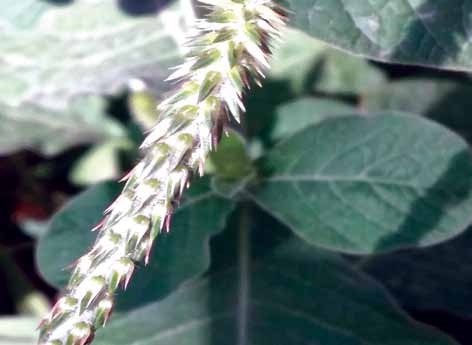
A vigorous, erect, branched annual plant growing 10-100 cm tall. Stems are green, often becoming red, slender and highly branched. Leaves are alternate, oval, held by long petioles with notched apex. Small green to reddish flowers grouped in dense clusters along slender spikes.
Habitat
Dry tropical areas, cultivated fields and irrigation channels; also gardens, farms, roadsides and other disturbed ground.
Distribution
A cosmopolitan weed of tropical and subtropical regions, extending into warm temperate zones; its original home is uncertain. In Oman it occurs in the north.
Pastoral value
Good grazing value; readily eaten by livestock.
Other uses
The leaves are eaten by people as a cooked green vegetable and are sold in local markets in many tropical countries. Yellow and green dyes can be obtained from the plant.
Sources
- الدليل الحقلي المصور للنباتات البرية في سلطنة عُمان (BOOK.pdf p.25)
- Plants For A Future - Amaranthus viridis — pfaf.org
- Useful Tropical Plants - Amaranthus viridis — tropical.theferns.info
- University of Arizona Extension - Toxic Plant: Pigweed (Amaranthus spp.) — extension.arizona.edu
- Oregon State University Extension - Plants causing nitrate/oxalate poisoning in pastures — extension.oregonstate.edu
- Wikipedia - Amaranthus viridis — en.wikipedia.org
- Feedipedia - Green amaranth (Amaranthus viridis), datasheet without content — feedipedia.org