Asphodelus tenuifolius Cav.
بصيلي، حمبصيص، حنقلوت
For people
- Eaten by people
- Edible
- Toxic to people
- Unknown
For livestock
- Grazed by livestock
- Limited fodder
- Toxic to livestock
- Unknown
Edibility and safety notes
A traditional and famine food: the leaves were cut and cooked (boiled with salt and spices) in Arabia and North Africa, and the seeds are eaten or ground and mixed with flour in India and North Africa. It tastes unpleasant, is traditionally regarded as laxative and diuretic, and its safety has not been properly studied, so eat only small amounts, cooked, and only if identification is certain. Livestock mostly avoid it; sheep and camels that eat much of it are reported to suffer digestive pain.
This guide is a hobby project, not expert advice. Never eat a wild plant, or feed it to animals, on the strength of this page alone. Read the disclaimer
Description
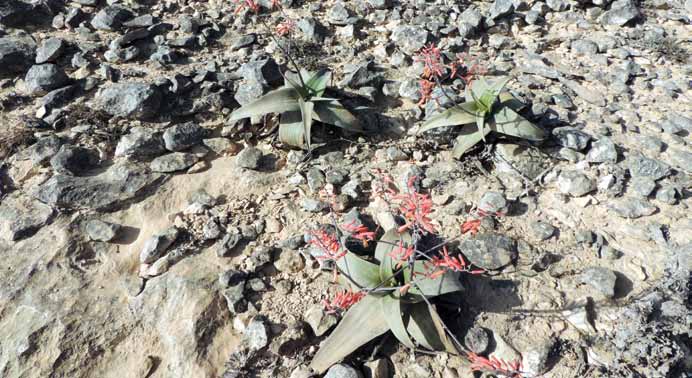
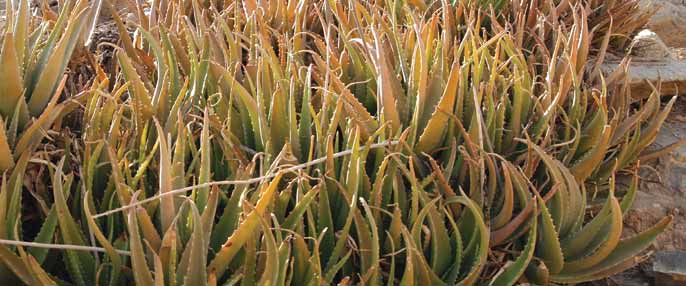
An erect, hairless annual herb 10-40 cm (up to 50 cm) tall. Leaves all basal, very narrow, hollow and thread-like, about half as long as the flowering stems. Flowers small, white to pinkish with a purple-brown stripe down the middle of each of the six tepals, in a loose raceme or sparingly branched panicle. Fruit a small globose three-valved capsule with a few triangular, pitted, grey-black seeds.
Habitat
Steppe and open scrub, sandy and rocky ground, roadsides and cultivated fields, where it is a common weed.
Distribution
Native to North Africa, Southern Europe, the Middle East and South Asia. Introduced to parts of North America, South America, and Australia.
Pastoral value
Not a grazing plant; unpalatable and little eaten by livestock.
Other uses
The leaves were formerly cooked and eaten, and the seeds are eaten or ground into flour in some countries. Traditionally used as a diuretic and laxative; the seeds for toothache and the crushed plant on ulcers and wounds.
Sources
- الدليل الحقلي المصور للنباتات البرية في سلطنة عُمان (BOOK.pdf p.133)
- Saudipedia — Onionweed (Asphodelus tenuifolius) — saudipedia.com
- Purdue University Famine Foods — Asphodelus tenuifolius — purdue.edu
- Encyclopedia of Medicinal Plants of UAE (DoH Abu Dhabi) — Asphodelus tenuifolius — medicinalplants.doh.gov.ae
- PMC — Asphodelus genus review (traditional uses, phytochemistry, safety) — pmc.ncbi.nlm.nih.gov
- Flora of Qatar — Asphodelus tenuifolius — floraofqatar.com
- IUCN-Med North African medicinal plants guide - Asphodelus tenuifolius (seen in search results; direct fetch failed) — uicnmed.org