Citrullus colocynthis (L.) Schrad.
النبات: (شورى). الثمرة: (هديجة)، علقم، حنظل
For people
- Eaten by people
- Not edible
- Toxic to people
- Toxic
For livestock
- Grazed by livestock
- Not grazed
- Toxic to livestock
- Toxic
Edibility and safety notes
Do not eat the fruit: the bitter pulp contains cucurbitacins and is a violent purgative; documented poisonings (bloody diarrhoea, vomiting, kidney and liver damage) and child deaths exist, including from use as a folk laxative. The seeds are eaten in parts of the Sahara and West Africa only after prolonged soaking or roasting to remove the bitterness; untreated seeds are still harmful. Livestock avoid it because of the bitterness, and the fresh or dried plant is toxic to goats and other ruminants; only industrially processed seed cake is used as feed.
This guide is a hobby project, not expert advice. Never eat a wild plant, or feed it to animals, on the strength of this page alone. Read the disclaimer
Description
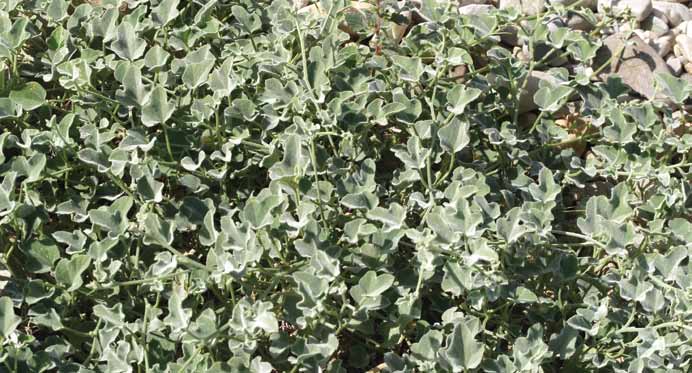
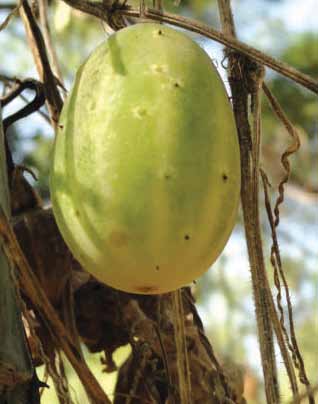
A desert viny plant resembling watermelon with vine length of 2.4-3 metres. Has small pale greenish-yellow flowers, forked tendrils, and hairy deeply cut leaves. Fruit is smooth, spherical, 5-10 cm diameter with extremely bitter pulp.
Habitat
Grows in sandy arid soils in desert environments.
Distribution
Native from North Africa and the Sahara through Egypt, Sudan and the Arabian Peninsula to Iran, Afghanistan, Pakistan and India; also in the Mediterranean region. Widespread in Oman.
Pastoral value
Avoided by most livestock due to extreme bitterness and toxicity.
Other uses
Seeds contain a high proportion of oil (reported around 45-50%) that is extracted for soap and other industrial uses; in parts of the Sahara and West Africa the debittered seeds are eaten or ground into meal. Traditionally used in folk medicine as a strong purgative and for rheumatism, diabetes, jaundice and skin complaints, but the plant contains cytotoxic cucurbitacins and such use has caused serious poisoning. The crushed fruit is also used traditionally against camel ticks and mange.
Sources
- الدليل الحقلي المصور للنباتات البرية في سلطنة عُمان (BOOK.pdf p.89)
- Feedipedia — Colocynth (Citrullus colocynthis) — feedipedia.org
- Plants For A Future — Citrullus colocynthis — pfaf.org
- Journal of Medical Case Reports — multiorgan toxicity after colocynth ingestion — link.springer.com
- Saudi Medical Journal — Citrullus colocynthis poisoning — smj.org.sa