Pulicaria undulata (L.) C.A.Mey.
For people
- Eaten by people
- Unknown
- Toxic to people
- Unknown
For livestock
- Grazed by livestock
- Limited fodder
- Toxic to livestock
- Unknown
Edibility and safety notes
Not a food plant. One scientific review reports that in Arabia and Egypt the aromatic plant (jethjath) is sometimes drunk as a herbal tea and used as an insect repellent, but this could not be confirmed in a second independent source, so edibility is listed as unknown. No poisoning of people or animals is documented. Livestock (camels, sheep, goats) graze it only reluctantly when little else is available.
This guide is a hobby project, not expert advice. Never eat a wild plant, or feed it to animals, on the strength of this page alone. Read the disclaimer
Description
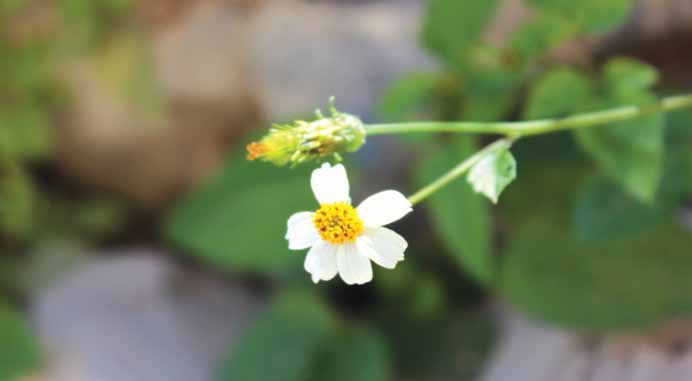
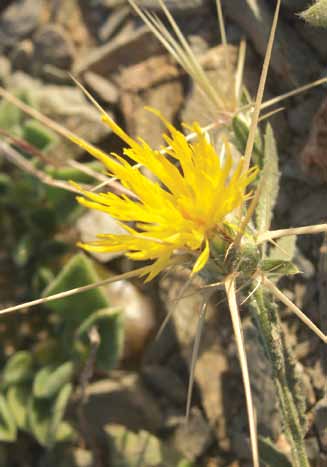
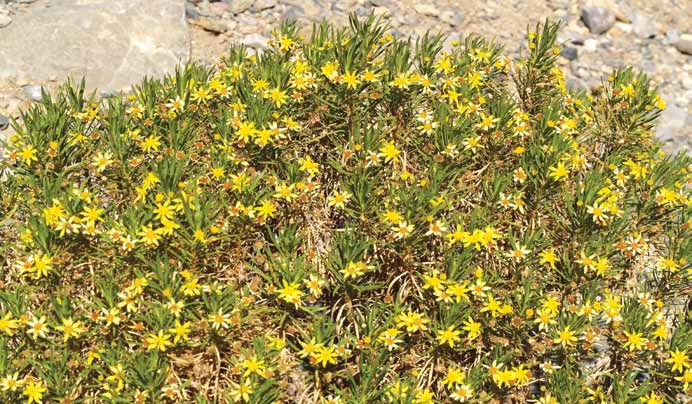
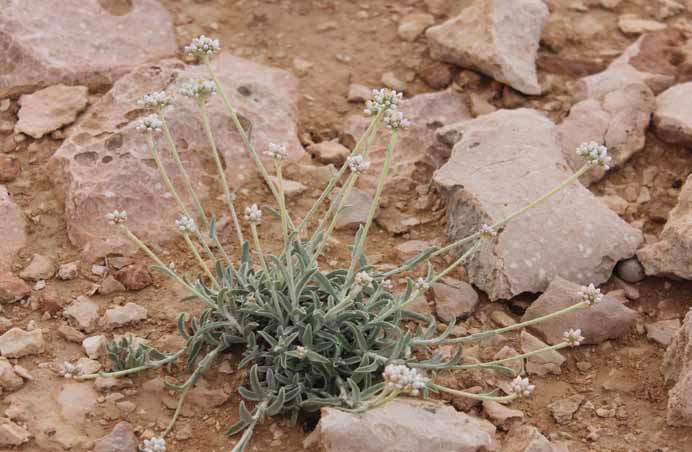
A small, aromatic, densely branched shrubby herb up to about 60 cm tall. The leaves are alternate, short, stalkless and clasping the stem, wavy with toothed margins; the stems and leaves are covered with white down, giving the plant a silvery look. Flower heads are about 1 cm across, yellow to orange, with very short ray florets and a domed, hemispherical centre. Flowers from about March to June (February to May in neighbouring Qatar).
Habitat
Widespread on sandy, silty and clayey soils in wadis, flood plains and silty depressions, often along roadsides.
Distribution
Saharo-Arabian and Sudanian element, found across the Arabian Peninsula, North and East Africa, Iraq, Iran, Afghanistan, Pakistan, India, Sudan, Ethiopia and Somalia. In Oman it is recorded mainly in the northern regions.
Pastoral value
Of low grazing value; camels and sheep eat it only when forced to by lack of other forage.
Other uses
An aromatic plant known locally as jethjath. Traditionally used in folk medicine for colds, coughs, colic and inflammation, and reported to be taken as a herbal tea and used as an insect repellent. Its essential oil is studied for antimicrobial and antioxidant activity.
Sources
- كتاب نباتات عمان
- Flora of Qatar — Pulicaria undulata — floraofqatar.com
- GBIF species match — Pulicaria undulata (L.) C.A.Mey. — api.gbif.org
- Chemical Profile, Antioxidant, Antimicrobial, and Anticancer Activities of the Water-Ethanol Extract of Pulicaria undulata Growing in the Oasis of Central Saudi Arabian Desert (Plants, 2021; PMC) — pmc.ncbi.nlm.nih.gov
- Anticancer Potential of Pulicaria crispa Extract on Human Breast Cancer MDA-MB-231 Cells (Bentham Science) — benthamscience.com
- Dr. Duke's Phytochemical and Ethnobotanical Databases — Pulicaria crispa — phytochem.nal.usda.gov