Reseda muricata C.Presl
ذنبان
For people
- Eaten by people
- Unknown
- Toxic to people
- Unknown
For livestock
- Grazed by livestock
- Not grazed
- Toxic to livestock
- Unknown
Edibility and safety notes
No reliable information on human edibility or toxicity of this mignonette was found; it is not known as a food plant and should not be eaten. The book states it is not grazed by livestock; Flora of Qatar notes it persists in overgrazed areas, which is consistent with animals avoiding it. No poisoning is documented.
This guide is a hobby project, not expert advice. Never eat a wild plant, or feed it to animals, on the strength of this page alone. Read the disclaimer
Description
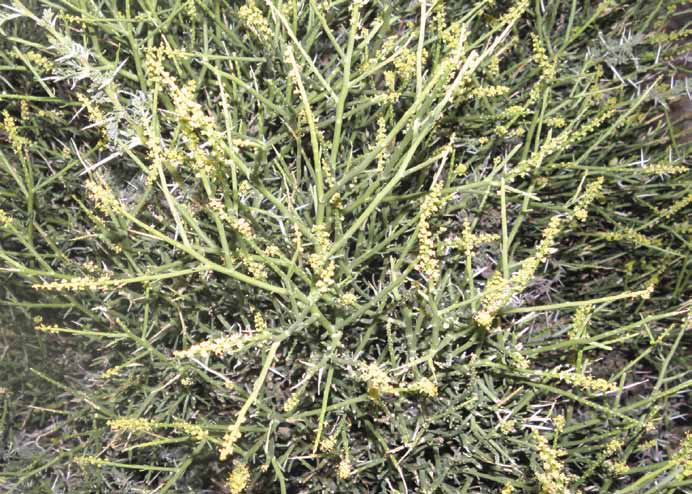
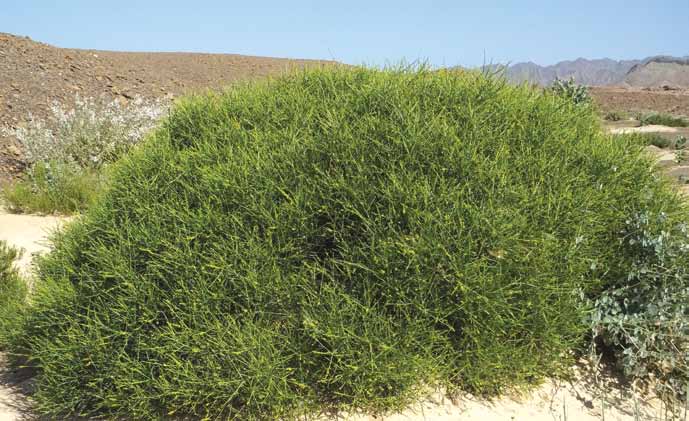
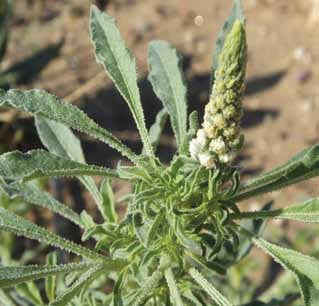
A low herb 10–50 cm tall, woody at the base, hairless or slightly hairy, usually with small glandular or warty projections; several erect to ascending, simple or branched stems. Leaves simple, 1–5 cm long, wavy, with margins strongly rolled back and clearly warty. Flowers small, in loose racemes, with 5 sepals, 5 small whitish to yellowish petals, 10 stamens and 5 carpels; the fruit is a rounded, rough-surfaced five-chambered capsule. Seeds kidney-shaped and wrinkled. Flowers mainly February–May.
Habitat
Steppes and deserts, especially on gypsum soils; also sandy and rocky ground, runnels and disturbed or overgrazed areas.
Distribution
Eastern Saharo-Arabian element: Egypt, the Levant, Iraq and the Arabian Peninsula; recorded in Oman.
Pastoral value
Not grazed by livestock.
Other uses
No significant traditional or economic uses documented.
Sources
- الدليل الحقلي المصور للنباتات البرية في سلطنة عُمان (BOOK.pdf p.176)
- Flora of Qatar — Reseda muricata — floraofqatar.com
- GBIF species match — Reseda muricata C.Presl — api.gbif.org
- GBIF occurrences in Oman — Reseda muricata — api.gbif.org