Ricinus communis L.
عَرَش، خروع، عشعشة، جنجنت
For people
- Eaten by people
- Not edible
- Toxic to people
- Toxic
For livestock
- Grazed by livestock
- Not grazed
- Toxic to livestock
- Toxic
Edibility and safety notes
Dangerously poisonous: the whole plant, and above all the seeds, contains ricin. A few chewed seeds can kill an adult and a single seed has been reported fatal to a child; symptoms (burning mouth, abdominal pain, vomiting, bloody diarrhoea, dehydration) may start hours after eating. Never eat or taste the seeds, and keep children away from the attractive mottled beans. Only industrially processed castor oil is free of ricin. Seeds and unprocessed seed cake have poisoned horses, cattle, sheep, goats, dogs and poultry. The sap can cause skin rashes and the pollen is strongly allergenic.
This guide is a hobby project, not expert advice. Never eat a wild plant, or feed it to animals, on the strength of this page alone. Read the disclaimer
Description
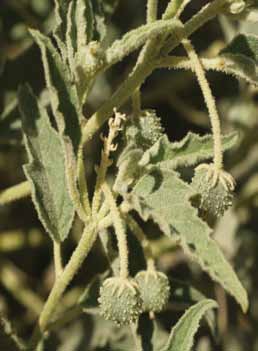
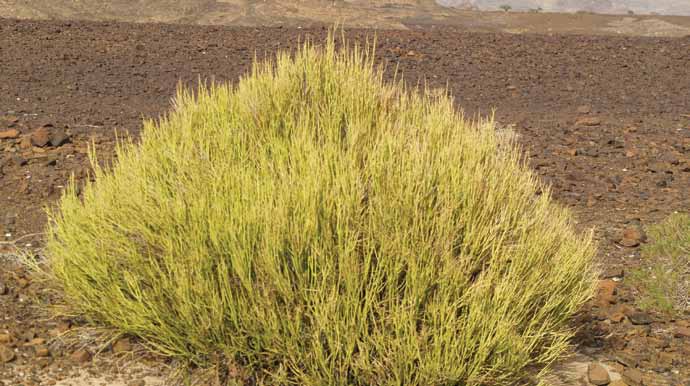
A fast-growing perennial shrub or small tree, usually 1–5 m tall (up to about 12 m in favourable conditions), monoecious. Leaves alternate, long-stalked, glossy, 15–45 cm long, palmate with 5–12 deep, coarsely toothed lobes; leaf stalks red or green. Flowers unisexual, in racemes, the male flowers above and the female flowers below. The fruit is a globose, softly spiny, greenish to reddish-purple capsule that splits into three parts, each holding one large, oval, smooth, shiny, brown-mottled and highly poisonous seed. Flowers for most of the year.
Habitat
Moist, well-drained soils in disturbed areas such as river beds, roadsides, fallow fields, and edges of cultivated lands. Favors high temperatures and full sun.
Distribution
Probably native to north-eastern or eastern Africa; now widespread and naturalised throughout tropical, subtropical and warm-temperate regions. In Oman it grows along wadi banks and on disturbed ground.
Pastoral value
No grazing value and toxic to livestock. The seeds and unprocessed seed cake contain ricin and have poisoned horses, cattle, sheep, goats, pigs, dogs and poultry; horses are reported to be the most sensitive.
Other uses
The seeds yield castor oil, used industrially in paints, varnishes, lubricants, soaps, polishes, plastics and cosmetics, formerly as lamp oil, and medicinally as a laxative and skin emollient. The leaves are traditionally used in Oman to keep henna moist and in place, and as an insecticide; stem fibre can be made into rope, and the seed cake and husks are used as fertiliser. Widely grown as an ornamental. The seeds are extremely toxic because of their ricin content, and the plant should not be used during pregnancy.
Sources
- الدليل الحقلي المصور للنباتات البرية في سلطنة عُمان (BOOK.pdf p.99)
- Worbs et al. 2011 — Ricinus communis intoxications in human and veterinary medicine (Toxins) — pmc.ncbi.nlm.nih.gov
- Plants For A Future — Ricinus communis — pfaf.org
- Useful Tropical Plants — Ricinus communis — tropical.theferns.info
- ASPCA Animal Poison Control — Castor Bean Plant — aspca.org
- Wikipedia — Ricinus — en.wikipedia.org
- Wikipedia — Ricin — en.wikipedia.org
- Flora of Qatar — Ricinus communis — floraofqatar.com
- GBIF occurrences in Oman — Ricinus communis — api.gbif.org