Tribulus terrestris L.
ضريس
For people
- Eaten by people
- Not edible
- Toxic to people
- Toxic
For livestock
- Grazed by livestock
- Limited fodder
- Toxic to livestock
- Toxic
Edibility and safety notes
Only a famine food: cooked leaves, shoots and ground fruits have been eaten in times of scarcity, but the plant contains steroidal saponins that damage the liver in animals, so it is not recommended for foraging. Tribulus supplements are unproven, and severe liver and kidney injury is reported in a man who took them daily. The spiny burrs pierce skin, feet and animals' mouths. Livestock graze the young plant, but sheep and goats that eat a lot of it develop liver damage with jaundice and severe sensitivity to sunlight ('geeldikkop'), sometimes fatal, and a staggers disease is also reported.
This guide is a hobby project, not expert advice. Never eat a wild plant, or feed it to animals, on the strength of this page alone. Read the disclaimer
Description
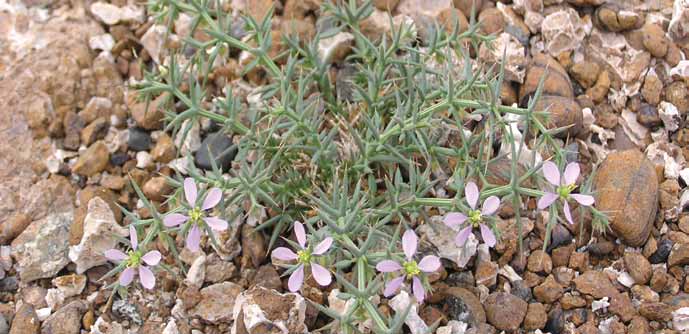
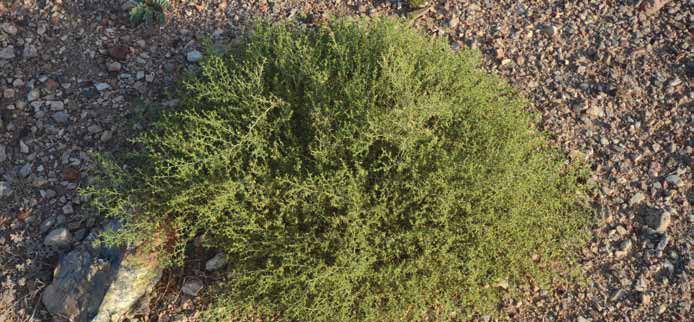
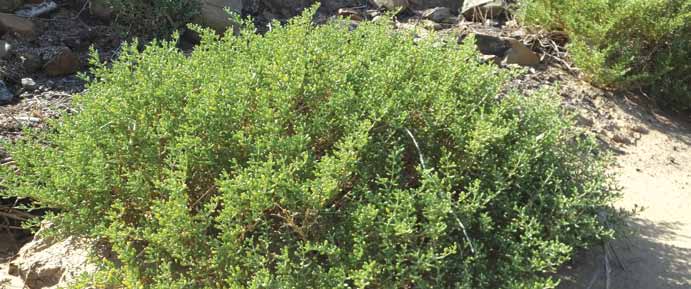
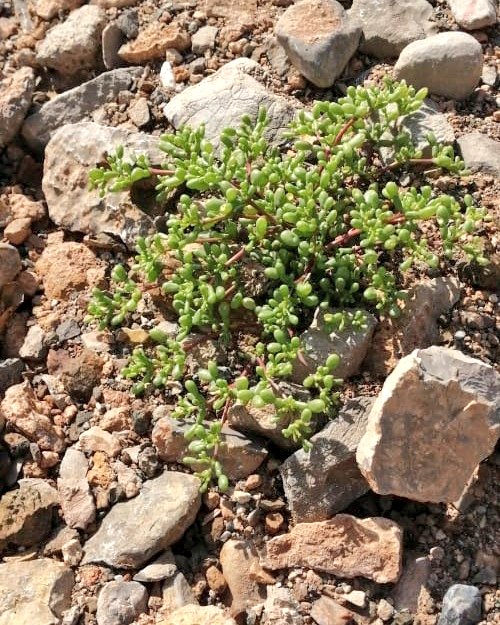
A taprooted herbaceous annual growing prostrate with stems spreading radially up to 1 m. Fern-like compound leaves are densely hairy. Lemon-yellow cup-shaped flowers with 5 petals appear in summer. Fruit splits into 5 hard burs with sharp spines that can puncture feet, shoes, and bicycle tires.
Habitat
Crop fields, pastures, roadsides, railways, waste places, parks, yards, and disturbed areas. Very drought tolerant. Grows in full sun to partial shade, preferring sandy soils but tolerating other soil types.
Distribution
Native to warm temperate and tropical regions of southern Eurasia and Africa. Widely introduced and naturalized in North America, Australia, and globally from latitudes 35 S to 47 N.
Pastoral value
Poor grazing, especially once the spiny fruits have formed, as the burrs injure the mouths and feet of animals. Sheep and goats that eat large amounts can develop liver damage and photosensitivity (geeldikkop) and nitrate poisoning.
Other uses
Traditionally used by local healers as a diuretic, tonic, pain reliever and blood-pressure remedy and for painful urination and colic; the leaves are used for enlarged spleen, sores, diarrhoea and cramps. Boiled leaves and ground fruits have been eaten as famine food in India and elsewhere. It is sold as a dietary supplement claimed to raise testosterone, but controlled studies have not confirmed any such effect. These are traditional uses, not medical advice.
Sources
- الدليل الحقلي المصور للنباتات البرية في سلطنة عُمان (BOOK.pdf p.201)
- Purdue University Famine Foods — Tribulus terrestris (leaves, ground fruits; nitrate warning) — purdue.edu
- University of Pennsylvania African Studies — famine food field guide entry (leaves edible; bloat in animals) — africa.upenn.edu
- Abu Dhabi DoH Encyclopedia of Medicinal Plants of UAE — Tribulus terrestris — medicinalplants.doh.gov.ae
- University of Pretoria repository — geeldikkop caused by Tribulus terrestris in sheep (Onderstepoort) — repository.up.ac.za
- Natural poisoning with Tribulus terrestris in sheep — clinical and laboratory features (Iran) — ijrhr.scu.ac.ir
- University of Arizona Extension — Toxic plant: Puncturevine/Goathead — extension.arizona.edu
- Useful Tropical Plants – Tribulus terrestris — tropical.theferns.info
- Plants For A Future – Tribulus terrestris — pfaf.org