
Ammi majus L.
ارجن عون، المسواك، ناينيا
For people
- Eaten by people
- Not edible
- Toxic to people
- Toxic
For livestock
- Grazed by livestock
- Not grazed
- Toxic to livestock
- Toxic
Edibility and safety notes
Do not eat. All parts, and especially the seeds, contain furanocoumarins (psoralens) that make skin and eyes abnormally sensitive to sunlight; handling the sap and then going out in the sun can cause burns, blisters and lasting dark patches in some people. Livestock that eat it, mainly the seed heads or contaminated hay, develop severe sunburn-like photosensitisation: cattle, sheep, goats, horses and poultry are all affected. It resembles other white-flowered plants of the carrot family, some of which are deadly, so never gather such plants for food.
This guide is a hobby project, not expert advice. Never eat a wild plant, or feed it to animals, on the strength of this page alone. Read the disclaimer
Description
An erect, hairless annual of the carrot family, 30-90 cm tall, with stiff, grooved, much-branched stems. Leaves are up to 10 cm or more long; the lower ones are long-stalked and divided into oblong to linear, toothed lobes, the upper ones are more finely divided. The white flowers are borne in long-stalked compound umbels up to 10 cm across, whose rays stay spreading in fruit and do not close into a nest. The fruit is oblong, smooth, 1.5-2 mm long, with slender ribs. Flowers from March to August.
Habitat
Roadsides, cultivated fields and the edges of irrigation channels.
Distribution
A Mediterranean species extending into neighbouring regions: southern Europe, North Africa and western Asia, including the Arabian Peninsula; in Oman it occurs in the north. Widely naturalised in other warm regions.
Pastoral value
Not a grazing plant. Poisonous to livestock: eating it, especially the seeds, causes photosensitisation (severe sunburn-like skin and eye damage) in cattle, sheep, goats, horses and poultry.
Other uses
The seeds contain furanocoumarins (psoralens) that have been used since ancient times in Egypt and India to treat vitiligo and psoriasis; this is done only under medical supervision because they cause burns on exposure to sunlight. The seeds were also traditionally used as a diuretic and in infusions to settle the digestion. The plant is grown as an ornamental and cut flower.
Sources
- الدليل الحقلي المصور للنباتات البرية في سلطنة عُمان (BOOK.pdf p.26)
- Plants For A Future - Ammi majus — pfaf.org
- Texas A&M AgriLife - Bishop's Weed (Ammi majus), plants toxic to livestock — rangeplants.tamu.edu
- ASPCA Animal Poison Control - False Queen Anne's Lace (Ammi majus) — aspca.org
- Revista Veterinaria (Argentina) - primary photosensitisation in cattle from Ammi majus — revistas.unne.edu.ar
- Plants of the World Online - Ammi majus (native range includes Oman) — powo.science.kew.org
From the same family
All in this family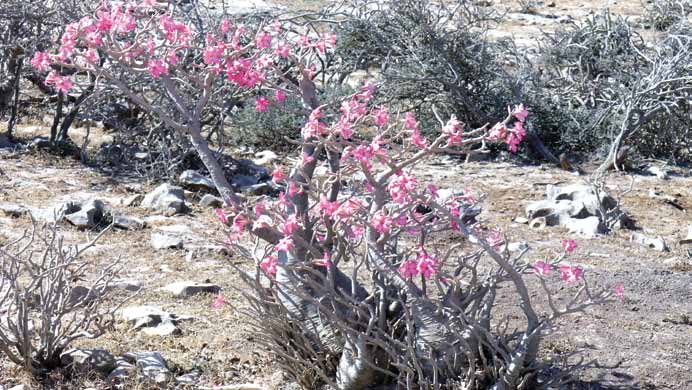
Apocynaceae
Desert rose, Impala lily, Sabi star, Mock azalea
Adenium obesum (Forssk.) Roem. & Schult.
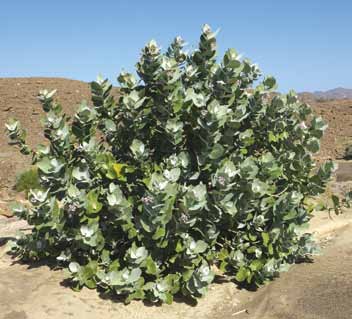
Apocynaceae
Apple of Sodom, Calotrope, Giant milkweed, Sodom apple
Calotropis procera (Aiton) Dryand
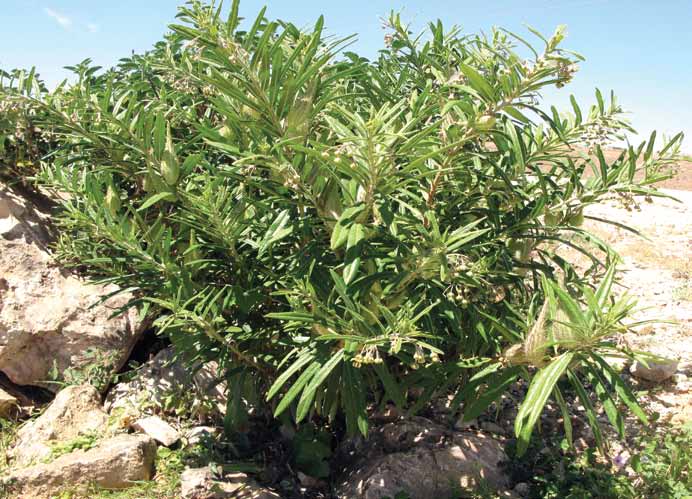
Apocynaceae
Milkweed, Narrow-leaved cotton bush, Balloon cotton bush, Swan plant
Gomphocarpus fruticosus (L.) W.T.Aiton
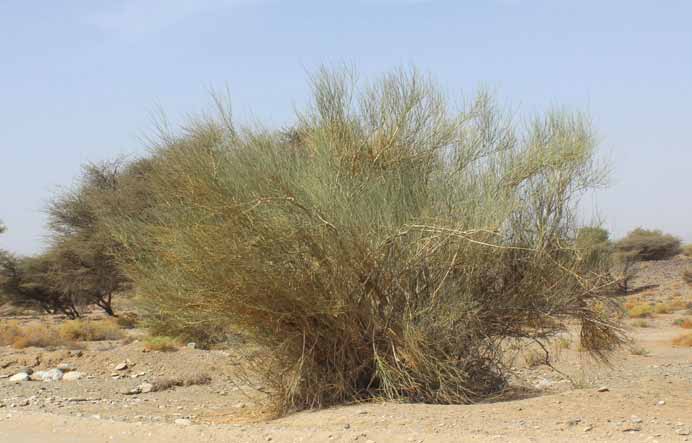
Apocynaceae
Broom Bush, Khimp, Khip, Marakh
Leptadenia pyrotechnica (Forssk.) Decne.