Anabasis setifera Moq.
شعر، شعران، حمض، قلى، الطحماء، الأشنان حالم الشويكة، عجرم، جيلو
For people
- Eaten by people
- Unknown
- Toxic to people
- Unknown
For livestock
- Grazed by livestock
- Limited fodder
- Toxic to livestock
- Unknown
Edibility and safety notes
No reliable information was found on people eating this plant or on its toxicity to people, so it should not be eaten. It is a salty desert shrub grazed mainly by camels; sheep and goats take only small amounts, and it matters most in late summer and autumn when other forage is scarce. No livestock poisoning is recorded for this species, but its safety has not been studied.
This guide is a hobby project, not expert advice. Never eat a wild plant, or feed it to animals, on the strength of this page alone. Read the disclaimer
Description
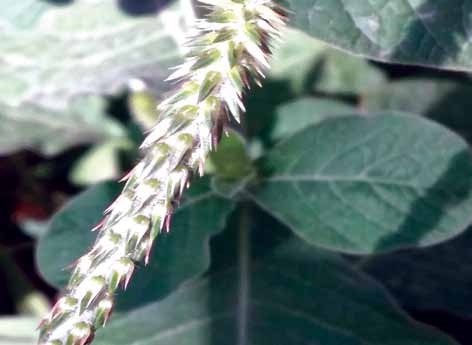
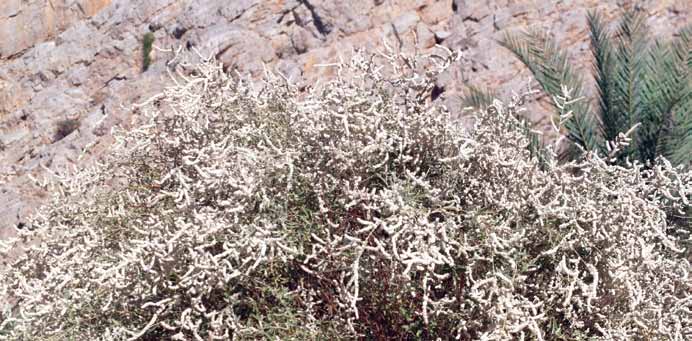
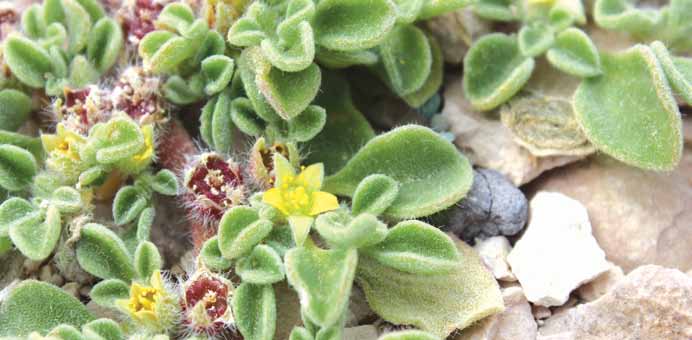
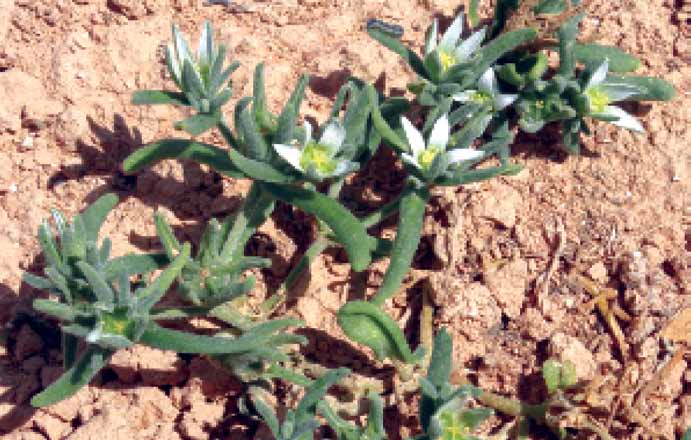
A pale green, somewhat bluish dwarf shrub 20-60 cm tall with woody, branched, erect to ascending stems. The leaves are opposite, short, fleshy and almost cylindrical, each ending in a small bristle that soon falls. The small greenish flowers are crowded in the leaf axils towards the branch tips, forming dense spikes; the fruits are winged and often pink or red. Flowers in autumn.
Habitat
Sandy and stony places and the foot of hills; also roadsides and compacted, moderately saline ground such as the edges of salt flats.
Distribution
From Egypt through the Arabian Peninsula and south-west Asia to north-west India.
Pastoral value
Grazed by camels; sheep and goats may eat it in small quantities. Its grazing value rises in late summer and autumn, when other forage on the range is scarce.
Other uses
Rich source of biologically active secondary compounds including sesquiterpenes, diterpenes, triterpenes, saponins and flavonoids. Leaf extract shows antimicrobial, anticancer and antioxidant properties.
Sources
- الدليل الحقلي المصور للنباتات البرية في سلطنة عُمان (BOOK.pdf p.74)
- eNature Qatar - Anabasis setifera (Shayran) — enature.qa
- Flora of Qatar - Anabasis setifera — floraofqatar.com