
Arnebia decumbens (Vent.) Coss. & Kralik
حماط، كحل
For people
- Eaten by people
- Unknown
- Toxic to people
- Unknown
For livestock
- Grazed by livestock
- Limited fodder
- Toxic to livestock
- Unknown
Edibility and safety notes
No reliable record of people eating this plant was found, and its safety is unstudied, so it should not be eaten. The red root was used only externally, as a cosmetic rouge and dye. Related Arnebia species contain liver-toxic pyrrolizidine alkaloids, which is a further reason for caution. The field guide rates it as weak grazing for livestock.
This guide is a hobby project, not expert advice. Never eat a wild plant, or feed it to animals, on the strength of this page alone. Read the disclaimer
Description
A bristly annual herb 5-15 cm (up to 30 cm) tall with slender, spreading to ascending, branched stems and a deep red root. Leaves alternate, rough with long hairs, linear-lanceolate to oblong, entire. Flowers small, yellow, in terminal coiled (scorpioid) cymes. The fruit consists of four small nutlets.
Habitat
Steppe and desert, on sandy and saline-sandy ground.
Distribution
From the Canary Islands and North Africa through the Arabian Peninsula (including Oman, Kuwait, Saudi Arabia and the Gulf states) to Central Asia and Mongolia.
Pastoral value
Weak grazing value.
Other uses
The deep red root was traditionally used by Bedouin women as a cosmetic rouge, and the roots yield a red dye.
Sources
- الدليل الحقلي المصور للنباتات البرية في سلطنة عُمان (BOOK.pdf p.54)
- Plants of the World Online — Arnebia decumbens (Vent.) Coss. & Kralik — powo.science.kew.org
- Qatar e-Nature — Arabian primrose (Arnebia decumbens) — enature.qa
- Wikipedia — Arnebia decumbens — en.wikipedia.org
- Al Riyadh Daily — Arnebia decumbens in the Northern Borders Region — alriyadhdaily.com
- PMC — Pyrrolizidine alkaloids and health risk of three Boraginaceae used in TCM (related Arnebia species) — ncbi.nlm.nih.gov
From the same family
All in this family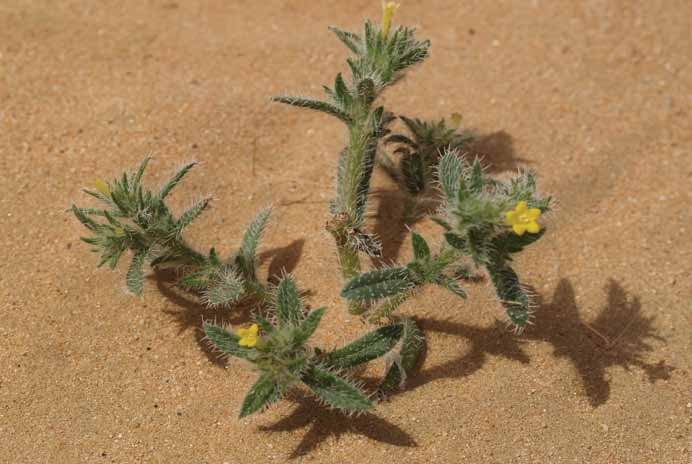
Boraginaceae
Rough arnebia, Hispid arnebia
Arnebia hispidissima (Lehm.) A.DC.
Boraginaceae
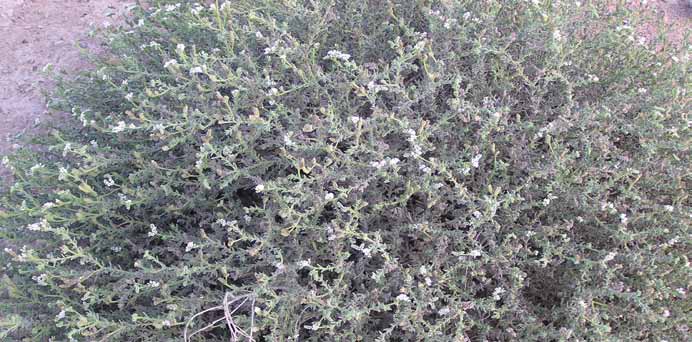
Berry-bearing Heliotrope
Heliotropium bacciferum Forssk.
Boraginaceae
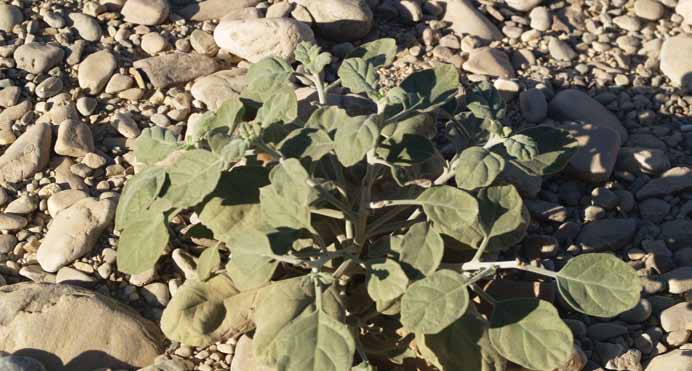
European Heliotrope, European Turn-sole
Heliotropium europaeum L.
Boraginaceae
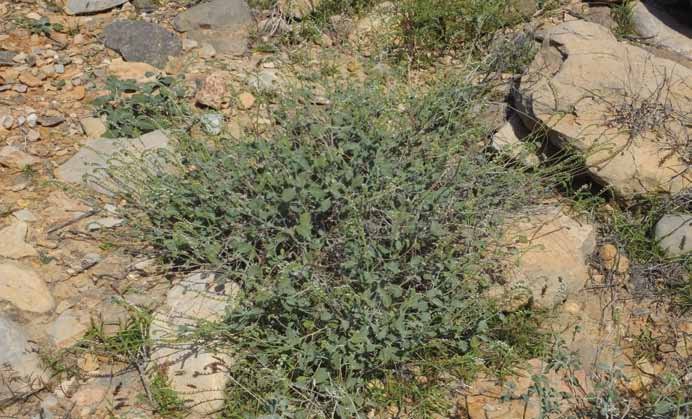
Long-flowered Heliotrope
Heliotropium longiflorum (A.DC.) Jaub. & Spach