Heliotropium europaeum L.
عقربة، خشفة، غبرية، صامر برما، حشيشة العقرب
For people
- Eaten by people
- Not edible
- Toxic to people
- Toxic
For livestock
- Grazed by livestock
- Not grazed
- Toxic to livestock
- Toxic
Edibility and safety notes
Poisonous to people and animals: all parts, especially the seeds, contain pyrrolizidine alkaloids (heliotrine, lasiocarpine) that cause cumulative, often irreversible liver damage. Bread made from wheat contaminated with its seeds caused outbreaks of fatal liver disease in Afghanistan. Do not eat it or use it internally. Livestock normally avoid it, but sheep, cattle, horses, pigs and poultry are poisoned when they graze dense stands or eat contaminated grain or straw; horses and cattle are the most sensitive.
This guide is a hobby project, not expert advice. Never eat a wild plant, or feed it to animals, on the strength of this page alone. Read the disclaimer
Description
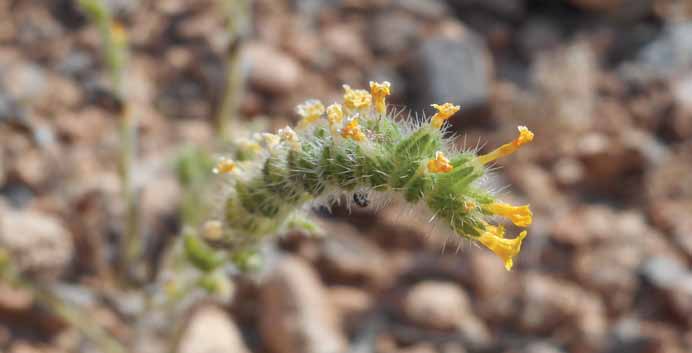
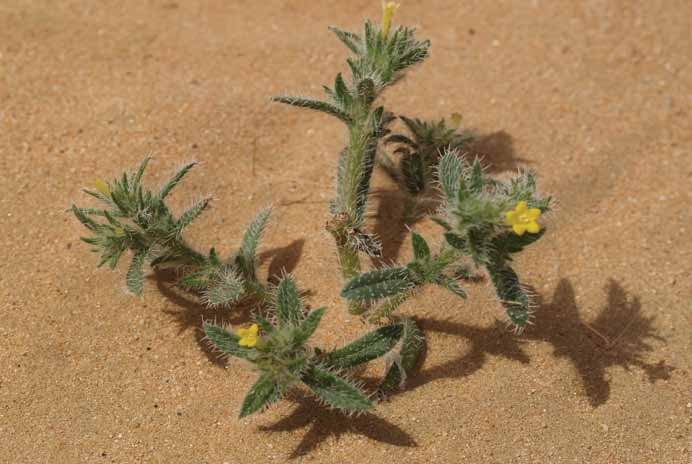
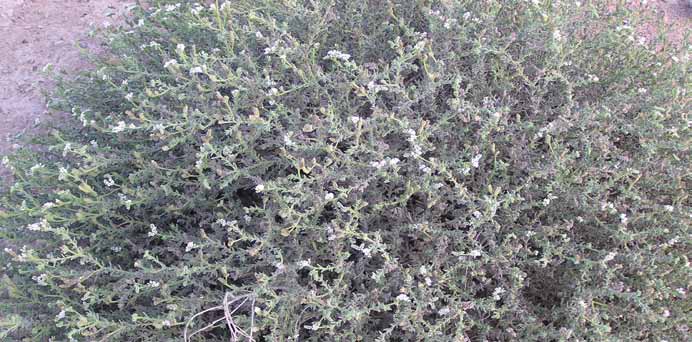
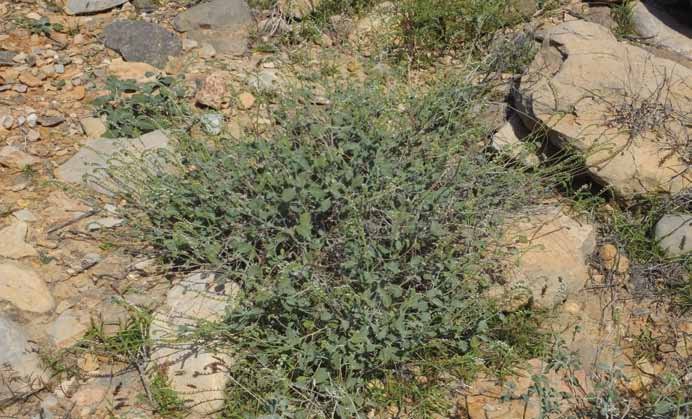
An erect annual herb 10-40 cm tall from a taproot, branched from the base, the stems covered with appressed hairs. Leaves simple, alternate, ovate to lanceolate, 2-6 x 1-3 cm, hairy, grey-green. Inflorescences coiled (scorpioid) cymes, terminal and axillary. Flowers small, white with a yellow throat, a few millimetres across. Calyx 5-lobed, persistent and enlarging in fruit. Corolla tubular-funnel-shaped, 5-lobed. Stamens 5. Ovary superior. Fruit of 4 ovoid nutlets, smooth or wrinkled-warty.
Habitat
Roadsides, disturbed soils, field margins, and fallow lands. Very drought resistant, thriving in poor well-drained soils in sunny environments.
Distribution
Native to Eurasia and North Africa. Widely naturalized in Australia, North America, and elsewhere.
Pastoral value
Not grazed; unpalatable and toxic to livestock. Its pyrrolizidine alkaloids cause chronic liver damage in sheep, cattle, horses, pigs and poultry, and seeds contaminating grain or straw are a known cause of poisoning.
Other uses
Traditionally used in Oman for snake bites and in European folk medicine for urinary complaints, although the plant is poisonous and such use is unsafe. It colonises disturbed ground as a pioneer weed. Contains toxic pyrrolizidine alkaloids.
Sources
- الدليل الحقلي المصور للنباتات البرية في سلطنة عُمان (BOOK.pdf p.57)
- Plants of the World Online — Heliotropium europaeum L. — powo.science.kew.org
- Cretan Flora — Heliotropium europaeum (description) — cretanflora.com
- Herbiguide — Common Heliotrope (livestock toxicity) — herbiguide.com.au
- Flock and Herd — Pyrrolizidine alkaloid toxicity in cattle — flockandherd.net.au
- WHO EMRO Epi Monitor 2008 — veno-occlusive disease outbreak, Gulran, Afghanistan (Heliotropium-contaminated wheat) — applications.emro.who.int
- Poisoning of feedlot cattle by seeds of Heliotropium europaeum (PubMed) — 0-www-ncbi-nlm-nih-gov.brum.beds.ac.uk