
Cassia senna L.
عشرق سنائي، سنا، سنامكي
For people
- Eaten by people
- Not edible
- Toxic to people
- Toxic
For livestock
- Grazed by livestock
- Not grazed
- Toxic to livestock
- Unknown
Edibility and safety notes
Not a food plant. The leaves and pods are the medicinal 'senna', a strong purgative containing sennoside anthraquinones; eating them causes cramps and diarrhoea, and larger or repeated amounts can cause dehydration, electrolyte loss and liver injury. Not for children or pregnant women; do not use without medical guidance. The field guide records that livestock do not graze it; no information on livestock poisoning by this species was found (poisoning reports concern other Senna species).
This guide is a hobby project, not expert advice. Never eat a wild plant, or feed it to animals, on the strength of this page alone. Read the disclaimer
Description
A shrub or woody herb up to about 1 m tall (occasionally more), sparsely covered with short appressed hairs, with ascending herbaceous stems. Leaves are even-pinnate, 8-10 cm long, with 3-7 (up to 9) pairs of lanceolate-oblong, sharp-tipped grey-green leaflets and persistent awl-shaped stipules. Flowers are yellow, about 1-1.5 cm across, in erect axillary racemes that overtop the leaves. The pod is flat, oblong to elliptic, 3-6 x 2-2.5 cm, straight or slightly curved, with a narrow wing along each suture, containing flattened obovate-wedge-shaped seeds. Flowers March to June.
Habitat
Grows in tropical and subtropical arid to semi-arid regions.
Distribution
Sudanian region: native from the central Sahara and North Africa and the Red Sea coasts (Egypt, Sinai, Sudan, Djibouti, Somalia) through the Arabian Peninsula to Pakistan and India; cultivated commercially in Sudan and India. Occurs in Oman.
Pastoral value
Generally not used as livestock feed.
Other uses
The leaves and pods are the well-known medicinal senna, traditionally and commercially used as a purgative for constipation; the active sennosides stimulate bowel movement. The plant is also a source of tannins and a yellowish-brown natural dye, and its wood has been used for farm tools.
Sources
- الدليل الحقلي المصور للنباتات البرية في سلطنة عُمان (BOOK.pdf p.109)
- Plants of the World Online — Senna alexandrina Mill. — powo.science.kew.org
- Wikipedia — Senna alexandrina — en.wikipedia.org
- Senna alexandrina (Bekele-Tesemma, 2007, Useful trees and shrubs of Ethiopia) — Pl@ntUse — plantuse.plantnet.org(Bekele-Tesemma,_2007)
- Flora of Arabia / Flora of Pakistan descriptions — Senna alexandrina (ffa.myspecies.info) — ffa.myspecies.info
- Useful Tropical Plants - Senna alexandrina — tropical.theferns.info
- Senna alexandrina (PROTA) - Pl@ntUse — plantuse.plantnet.org(PROTA)
From the same family
All in this family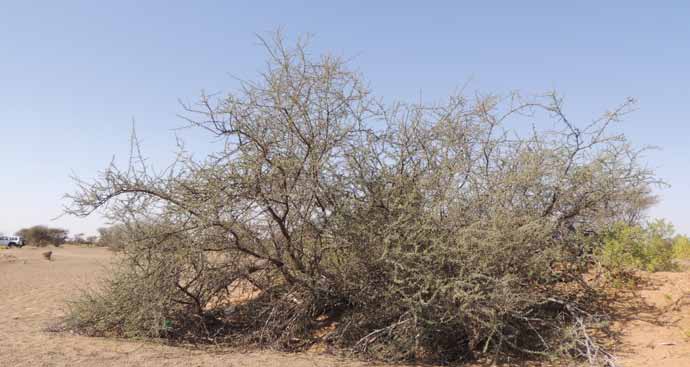
Fabaceae
Salam tree, Desert acacia
Acacia ehrenbergiana Hayne.
Fabaceae
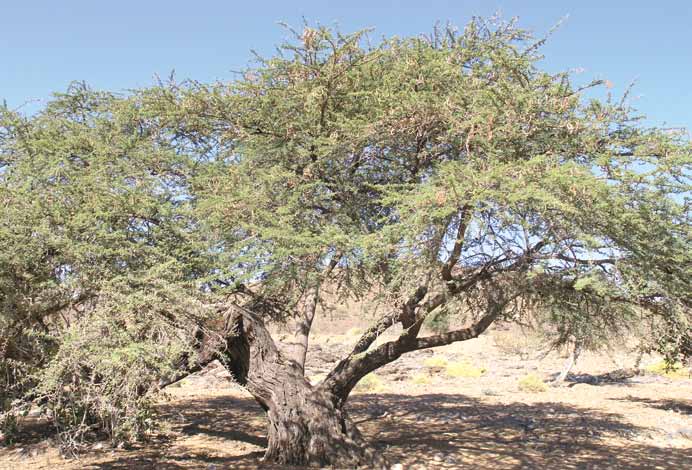
Red thorn, Grey-haired acacia, Talh
Acacia gerrardii Benth.
Fabaceae
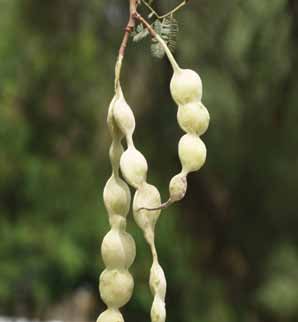
Gum arabic tree, Babul, Thorn mimosa, Egyptian acacia, Thorny acacia
Acacia nilotica (L.) Del.
Fabaceae
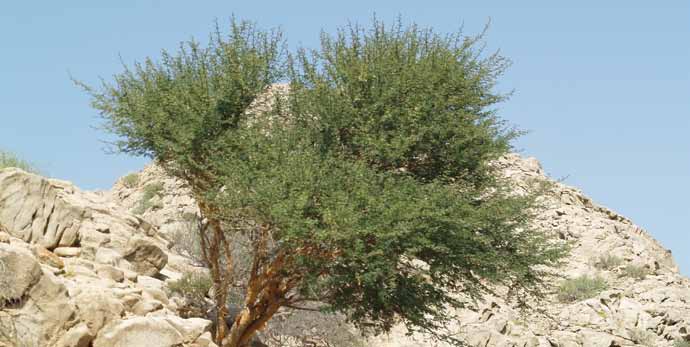
Gum acacia, Gum arabic tree, Sudan gum
Acacia senegal (L.) Willd.