Convolvulus virgatus Boiss.
رشا، هباب، حباب، عظلم
For people
- Eaten by people
- Unknown
- Toxic to people
- Unknown
For livestock
- Grazed by livestock
- Limited fodder
- Toxic to livestock
- Unknown
Edibility and safety notes
No reliable information was found on whether people can eat this plant or whether it is poisonous, so it should not be eaten. Livestock browse it: the Omani field guide says it is grazed before it becomes woody, and the UAE Red List names livestock browsing as its main pressure. Older branches are stiff and spine-tipped. No report of livestock poisoning was found.
This guide is a hobby project, not expert advice. Never eat a wild plant, or feed it to animals, on the strength of this page alone. Read the disclaimer
Description
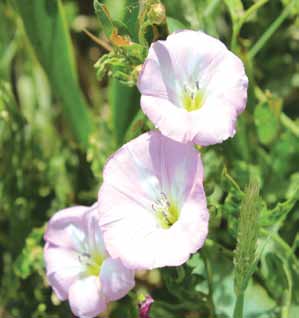
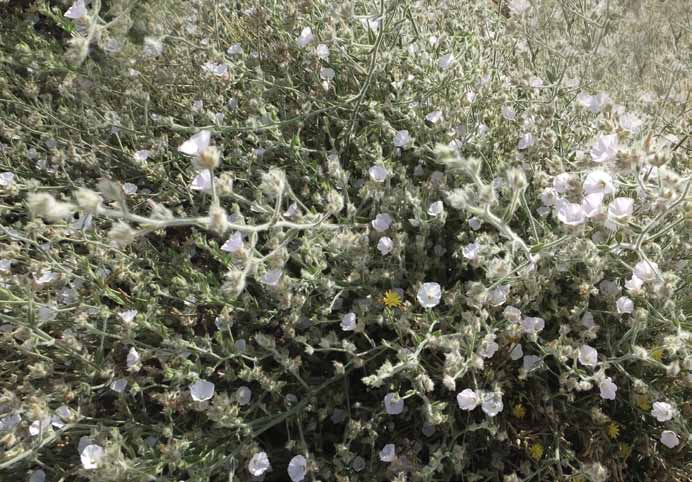
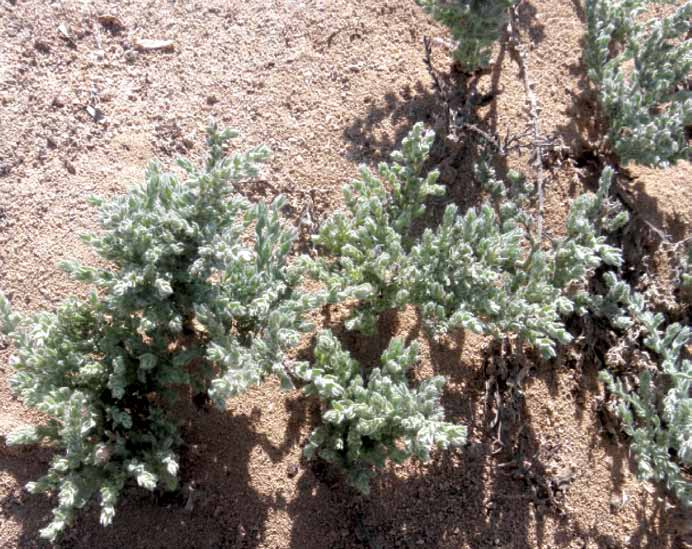
A perennial with a woody base and spreading stems up to 40 cm. Older branches are yellowish, stiff with spiny tips. Leaves are lance-shaped to linear, 0.2-1.5 cm long. Flowers are solitary or in clusters of 2-3, white to pink, closing by mid-morning. Blooms January to April.
Habitat
Sand and gravel plains, wadi beds, coastal sands and the stony slopes of low mountains.
Distribution
Eastern Arabian Peninsula (United Arab Emirates and northern Oman), southern Iran and Pakistan.
Pastoral value
Grazed by livestock before the branches become woody, according to the Omani field guide.
Other uses
No documented uses were found.
Sources
- الدليل الحقلي المصور للنباتات البرية في سلطنة عُمان (BOOK.pdf p.87)
- UAE National Red List — Convolvulus virgatus — nationalredlist.org
- Plants of the World Online — Convolvulus virgatus Boiss. (seen in search results) — powo.science.kew.org
- eFlora of India — Convolvulus virgatus (photos from Oman, synonyms) — efloraofindia.com