
Gomphocarpus fruticosus (L.) W.T.Aiton
عطب، هريوم أعوون، هريوم أثريين
For people
- Eaten by people
- Not edible
- Toxic to people
- Toxic
For livestock
- Grazed by livestock
- Not grazed
- Toxic to livestock
- Toxic
Edibility and safety notes
Poisonous: all parts contain heart-active cardenolides (cardiac glycosides) and must not be eaten by people. The milky latex is corrosive and irritates the skin, and some people react allergically, so avoid contact with skin and eyes and wash hands after handling. It is toxic to livestock, causing breathing difficulty, heart disturbance, severe gastroenteritis and death when enough is eaten; animals normally avoid it, which is why it increases on overgrazed land.
This guide is a hobby project, not expert advice. Never eat a wild plant, or feed it to animals, on the strength of this page alone. Read the disclaimer
Description
An erect, much-branched shrubby perennial of the Apocynaceae (milkweed subfamily), usually 1-1.5 m tall (up to 2.5 m), with milky latex in all parts. Leaves opposite, narrow, linear to narrowly elliptic, about 6-12 cm long and 0.5-1.5 cm wide, short-stalked. Flowers about 1.5 cm across, nodding in umbel-like clusters of about 6; corolla lobes pale greenish-yellow to white, fringed with short white hairs, with a five-lobed corona. Fruit an inflated, ovoid, pointed follicle about 6 x 1.5 cm, single or paired, covered with soft bristles; seeds reddish-brown with a tuft of long white silky hairs.
Habitat
Steep wooded slopes and roadsides; also disturbed and overgrazed ground.
Distribution
Native to southern and eastern Africa (South Africa to Ethiopia) and southern Arabian Peninsula (Oman, Yemen, southern Saudi Arabia). Widely naturalized in Australia, New Zealand, and other regions.
Pastoral value
Poisonous to livestock and not a grazing plant; its presence is an indicator of overgrazing. It contains cardenolides that can kill animals if eaten in quantity.
Other uses
In Africa the stem fibre and seed floss are used for string, snares and stuffing pillows. It has been used in African folk medicine, but all parts are poisonous and such use is not advisable. Grown as an ornamental for its inflated fruits.
Sources
- الدليل الحقلي المصور للنباتات البرية في سلطنة عُمان (BOOK.pdf p.29)
- PROTA / PlantUse — Gomphocarpus fruticosus — plantuse.plantnet.org(PROTA)
- University of Pretoria veterinary repository — Gomphocarpus fruticosus (acute cardenolide poisoning of livestock) — repository.up.ac.za
- POWO — Gomphocarpus fruticosus (L.) W.T.Aiton — powo.science.kew.org
- SANBI PlantZAfrica — Gomphocarpus fruticosus — pza.sanbi.org
From the same family
All in this family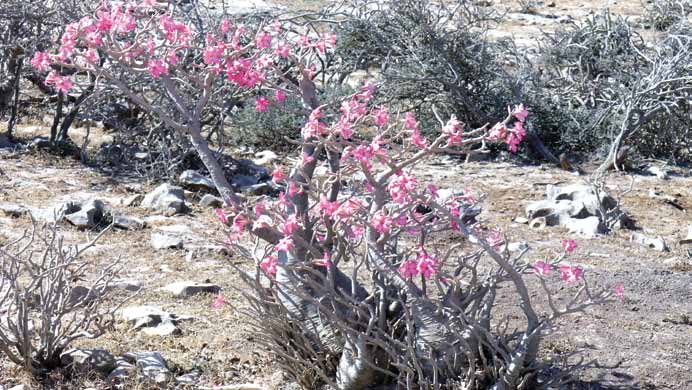
Apocynaceae
Desert rose, Impala lily, Sabi star, Mock azalea
Adenium obesum (Forssk.) Roem. & Schult.
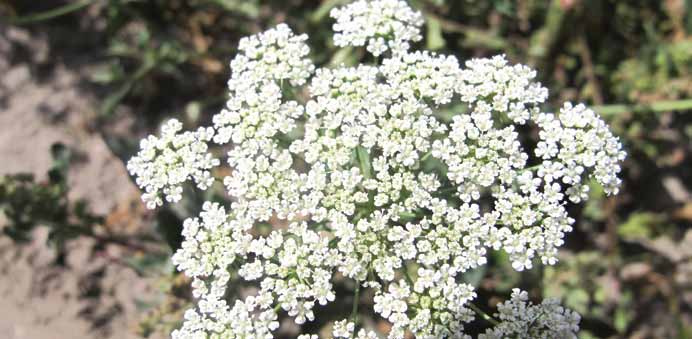
Apiaceae
Bishop's weed, False Queen Anne's lace, Greater ammi, Bishop's flower
Ammi majus L.
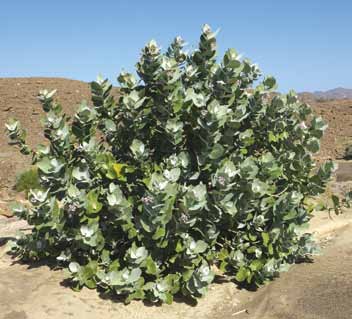
Apocynaceae
Apple of Sodom, Calotrope, Giant milkweed, Sodom apple
Calotropis procera (Aiton) Dryand
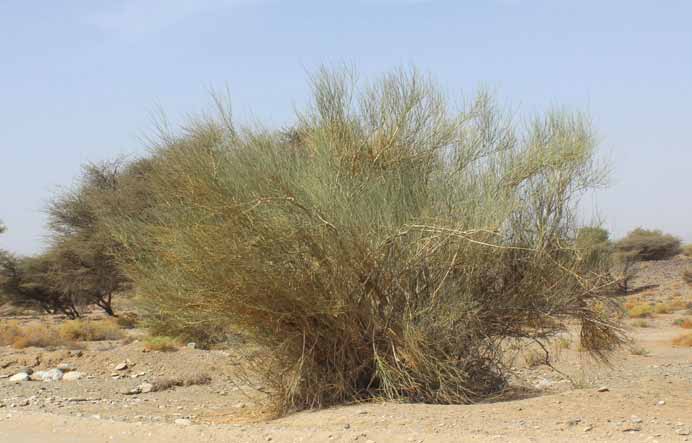
Apocynaceae
Broom Bush, Khimp, Khip, Marakh
Leptadenia pyrotechnica (Forssk.) Decne.