
Tephrosia purpurea (L.) Pers.
ظفره
For people
- Eaten by people
- Not edible
- Toxic to people
- Toxic
For livestock
- Grazed by livestock
- Not grazed
- Toxic to livestock
- Toxic
Edibility and safety notes
Do not eat. The leaves and seeds contain rotenoids (rotenone, tephrosin), which are used as fish and insect poisons, and Omani herbalists warn that the plant can be harmful to people; its effect on humans has not been properly studied. Livestock find it unpalatable and it spreads on overgrazed land. It is poisonous to goats: in a feeding study 11 of 12 goats given the shoots died, with breathing difficulty, weakness and internal bleeding, and young sheep and goats fed it in Cameroon also died. Keep it away from fish ponds.
This guide is a hobby project, not expert advice. Never eat a wild plant, or feed it to animals, on the strength of this page alone. Read the disclaimer
Description
An erect annual or short-lived perennial legume shrub of the Fabaceae family, 40-150 cm tall, with a long stout taproot. Many slender branches with cylindrical stems, woody at base, with stiff coarse hairs. Leaflets are obovate-oblong, silky textured. Purple flowers, most attractive in January. Pods 25-51 mm long with 6-7 brownish seeds.
Habitat
Grassy fields, waste places, thickets, ridges, and roadsides. Grows in poor, dry, gravelly, rocky, and sandy soils at low altitudes up to 1300 m. Common wasteland weed.
Distribution
Native to southwestern Asia (Arabian Peninsula, Iran, Pakistan, India, Sri Lanka) and northeastern Africa (Egypt, Sudan, Ethiopia, Somalia). Pantropical distribution as introduced species.
Pastoral value
Not grazed: unpalatable to livestock and toxic to goats; it spreads on overgrazed land. Reports of its use as goat fodder come from India and West Africa, where results are conflicting and deaths of young animals have been recorded.
Other uses
Traditionally used by herbalists in Oman and the UAE for cough, bronchitis, earache, wounds and fractures. The pounded leaves are used as a fish poison, and the plant was formerly a source of an indigo-like dye. Elsewhere it is grown as a green manure to improve soil fertility. Omani herbalists warn that it can be harmful.
Sources
- الدليل الحقلي المصور للنباتات البرية في سلطنة عُمان (BOOK.pdf p.122)
- Wikipedia - Tephrosia purpurea (incl. subsp. apollinea; goat toxicity study, Oman distribution) — en.wikipedia.org
- Feedipedia - Ahuhu (Tephrosia purpurea) — feedipedia.org
- FAO - feeding trials with Tephrosia for sheep and goats in Cameroon (mortality of young animals) — fao.org
From the same family
All in this family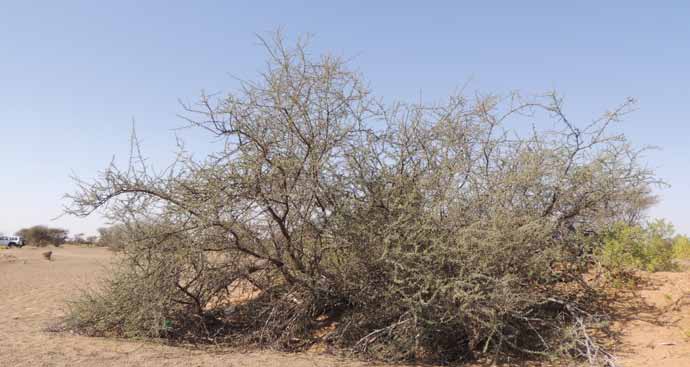
Fabaceae
Salam tree, Desert acacia
Acacia ehrenbergiana Hayne.
Fabaceae
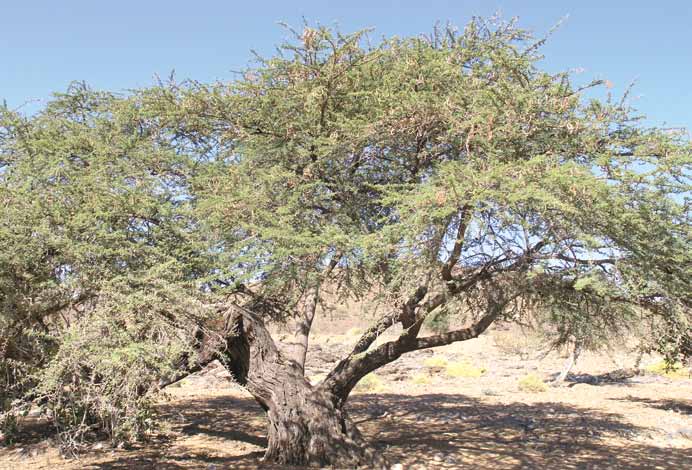
Red thorn, Grey-haired acacia, Talh
Acacia gerrardii Benth.
Fabaceae
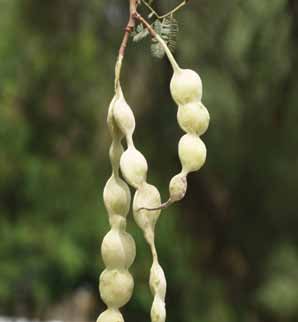
Gum arabic tree, Babul, Thorn mimosa, Egyptian acacia, Thorny acacia
Acacia nilotica (L.) Del.
Fabaceae
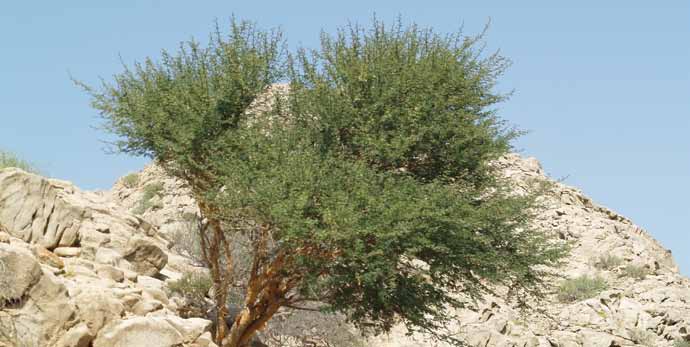
Gum acacia, Gum arabic tree, Sudan gum
Acacia senegal (L.) Willd.