
Crotalaria aegyptiaca Benth.
أخو الرمت، نزار، نزاع ، نتاش، نتش
For people
- Eaten by people
- Not edible
- Toxic to people
- Unknown
For livestock
- Grazed by livestock
- Limited fodder
- Toxic to livestock
- Unknown
Edibility and safety notes
Not a food plant; no source records people eating any part. Most Crotalaria (rattlepod) species contain pyrrolizidine alkaloids that damage the liver, lungs and kidneys of people and grazing animals, and the seeds are the most toxic part, so this species should be treated as potentially poisonous even though no analysis specific to it was found. Camels browse it in the UAE and the Omani field guide rates it as good grazing; no livestock poisoning by this particular species is documented.
This guide is a hobby project, not expert advice. Never eat a wild plant, or feed it to animals, on the strength of this page alone. Read the disclaimer
Description
A twiggy, much-branched perennial shrublet 40-60 cm tall, grey with appressed hairs and appearing almost leafless; the stiff, angular branches often end in spines. Leaves are simple, alternate, sessile, ovate to oblong, only 3-8 mm long and fall early. Flowers are yellow, about 1 cm long, the standard petal streaked with red, borne singly or in short terminal racemes; the calyx is grey-hairy with five lanceolate teeth. The pod is small (about 1 cm), inflated, ovoid and hairless, containing 1-3 kidney-shaped seeds. Flowers February to April.
Habitat
Grows in gravel plains and sand dunes in desert or dry shrubland biomes. Drought-tolerant, prefers full sun and well-drained soil.
Distribution
Native from Egypt to India and north Somalia. Found in UAE, Yemen, Saudi Arabia, Oman, Jordan, Palestine and Iran.
Pastoral value
Browsed by camels (recorded as a grazing pressure on the species in the UAE); the Omani field guide rates it as good grazing. Caution: Crotalaria species generally contain pyrrolizidine alkaloids that are toxic to livestock.
Other uses
No well-documented uses were found for this species. It is a wild relative of sunn hemp (Crotalaria juncea), a fibre and green-manure crop.
Sources
- الدليل الحقلي المصور للنباتات البرية في سلطنة عُمان (BOOK.pdf p.110)
- Plants of the World Online - Crotalaria aegyptiaca Benth. — powo.science.kew.org
- UAE National Red List of Vascular Plants - Crotalaria aegyptiaca — nationalredlist.org
- Queensland DAF eResearch Archive - Crotalaria species with hepatotoxic pyrrolizidine alkaloids poisoning grazing livestock — era.daf.qld.gov.au
- University of Pretoria - Analysis of pyrrolizidine alkaloids in Crotalaria species (food health risks) — repository.up.ac.za
From the same family
All in this family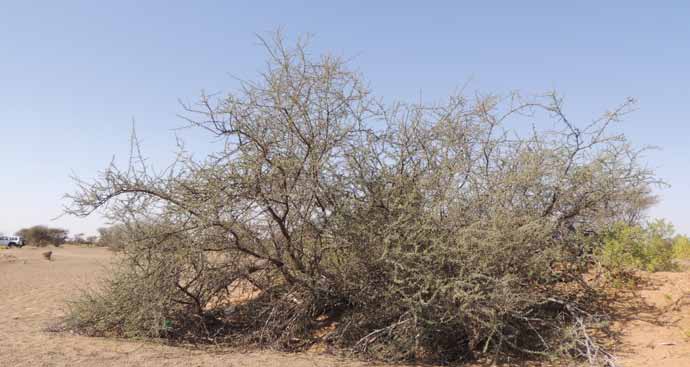
Fabaceae
Salam tree, Desert acacia
Acacia ehrenbergiana Hayne.
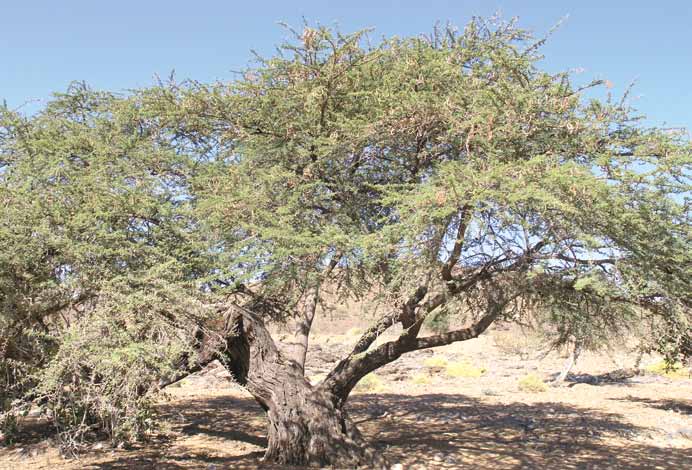
Fabaceae
Red thorn, Grey-haired acacia, Talh
Acacia gerrardii Benth.
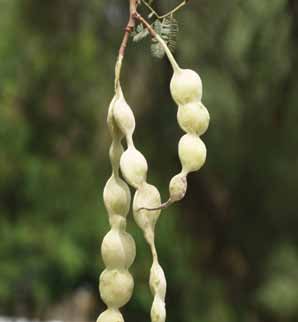
Fabaceae
Gum arabic tree, Babul, Thorn mimosa, Egyptian acacia, Thorny acacia
Acacia nilotica (L.) Del.
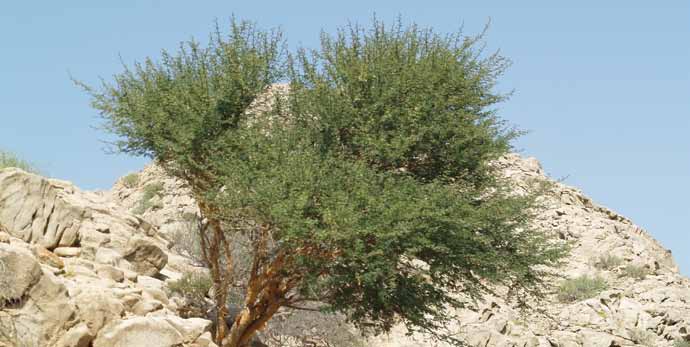
Fabaceae
Gum acacia, Gum arabic tree, Sudan gum
Acacia senegal (L.) Willd.